All the lives lost and money spent on liberating
Friday, March 24, 2006
Opium to the People


Thursday, March 16, 2006
Another Obituary
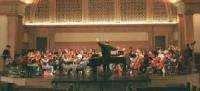
Another plug was pulled last night when the board of my wife's Northwest Chamber Orchestra voted to file for bankruptcy under Chapter 7, right before two planned tours to Michigan and Finland. After 33 years of bringing beautiful music to the Seattle community the group has had its financial ups and downs, but this time it fell victim to a certain clique's ill will. Although the orchestra's main fundraiser just a couple weeks ago was well attended, a lot of wines and other items to be auctioned off were withdrawn last minute, thanks to outside interference and the proceeds did not meet expectations. Even an article with a negative spin was planted in one of the dailies just prior to the event. Obviously the orchestra had been a thorn on the side of certain local influential folks and they had done their best to set the organization up for failure. Some sizable pledges given were not honored, although this would have been pocket change for the 'philanthropic' individuals. Others who wanted to be in charge of running the ship were not willing to donate a dime. Some terrible miscalculations were made a number of times, whether artistic or administrative. This group, unlike most others of its kind, provided health and other benefits to the core musicians, so the innocents will suffer once again.
Seattle is a progressive community in many areas, but also hopelessly provincial. Neither the Sante Fe nor Seattle International Music Festivals could last in this environment. The classical music scene in town seems to be governed by two 'mafias', one hiding behind a religious-cultural shield, and the other being a sexual minority club. Corruption and greed for power are prevailing dark forces once again.
With hundreds of emails in my wife's prossession, the true story will make a fascinating read one day.
Tuesday, March 14, 2006
Haman
Spring seems to be arriving in Seattle, although some days have been surprisingly reminescent of winter, with strong, cold winds and even a dusting of snow. However, our Sun is at its closest to Earth at this time of the year and one feels its powerful warmth whenever the skies are clear. Many allergic people are suffering from all the pollen in the air but the blossoms are a beautiful sight, not to mention the new leaves which are uniquely "baby green" in color. A walk in a forest or park can do wonders to one's mental state. Spring break is almost here and I can hardly wait for my college junior to come home for almost two weeks. Hopefully she'll take care that her old man gets a hike of a few miles done on a regular basis.
Two days ago maestro Milton Katims was remembered in one of the most wonderful memorials I can recall, in Meany Hall at UW. Pianists Bela Siki and Robin McCabe played, as did my wife and I, accompanied by a quartet from NWCO, with the help of a senior student of mine from Seattle Pacific University. At the end there was a fabulous video presentation of this great man's life. We felt very honored to be part of this occasion. A lot of people showed up, but almost more noticable was the absence of the ones who should have been there but opted not to come, from certain organizations which more or less owe their existence to Milton. After all, he was the force behind Seattle getting their Opera House which became the main venue for these groups to perform and grow. One doesn't need to agree with everything a person did or said, but one has to be able to to give credit where credit is due. Ingratitute is the way of the world. Enough said.
Last week brought sad news from my home in Finland: it is basically a one-company town and that company, the world's largest maker of magazine-quality paper, decided to eliminate thousands of jobs and move them elsewhere where people will work for much less and trees grow faster. Naturally, the company's stock price went up sharply. This is so typical to todays's world and global economy: to benefit a few, far more many have to suffer. Although people there will be protected much better than in this system and the place will not become another Flint, Michigan, it will still negatively affect the lives of everyone there, from subcontractors to businesses and lowered real estate values. Managements seldom have a heart and those in charge only think of themselves.
Time to take out Purim's noise makers and protest. I just passed a car with a bumper sticker that stated "Stop bitching - start a revolution". Wish it were that easy.
Monday, February 27, 2006
Milton Katims 1909-2006
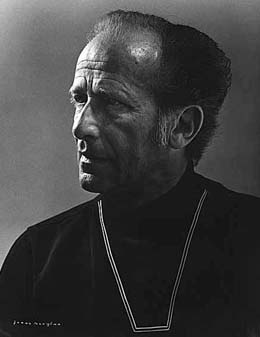
It was sad but not unexpected to receive a phone call today about our dear friend Milton Katims having passed away. My wife had talked to him just recently on the phone and between bites of food he commented that old age had finally caught up with him. We went to visit him five days ago but he was in deep sleep and neither of us had the heart to awaken him. We just spent a good amount of time watching him, guessing that this might be the last time we would see him. Having been born as a preemie, weighing only three pounds at birth, he again resembled a helpless baby. Life is indeed a circle.
What an amazing man and an artist
We have an old book titled ‘Living Musicians’ printed in 1940, and Milton is featured in it as a young but already very accomplished violist and conductor. He worked closely with Toscanini and he relished opportunities to reminisce about these experiences.
On a personal note, I shall never forget all the genuine support
Thursday, February 09, 2006
Does size matter?
 No, this is not a study about sexual satisfaction, but rather some thoughts about human nature and physical size.
 It is obvious that being much taller than average makes one stand out in a crowd, literally. Most men are not bothered by it, certainly not if they play basketball, but many women find themselves feeling akward. No high heels there! In musicians, tall people often gravitate towards certain instruments, such as the cello and double bass, where their size actually makes it easier to play the instrument in question. I remember a cellist who could pick up his instrument and play it like the violin! Pianists probably benefit from large hands, long limbs and easier reach in general. For the violin, however, tallness often makes a person seem like he is playing a toy instrument and as a general rule, short people have fared better. For young soloist-wannabees, it is easier to pass as a wunderkind, who is a lot younger than in reality, for years longer if one's height supports this assumption.
People either prefer to get attention or not to. Being of short stature is difficult for many as they feel they won't be noticed well enough. We often talk about the Napoleon complex. I am, of course, not talking about true midgets, who will get extra attention whether they like it or not, but men and women who are considerably shorter than the average. While I have dearly loved some people belonging to this category, even some of them have developed a personality that could be described as abrasive or at least attention demanding. Some of the 'little people' have been the closest people to me. Then there are those who are outright nasty and odious people. A skunk is not a large animal, yet other creatures, no matter how big and ferocious, stay away from one. Of course, human skunks exist in all sizes and shapes, but a a disproportionate number of them are in the short-people group.
Other than Napoleon or Alexander the Great, a lot of 'little' people have done well because they have deserved it. The first time I met Barbara Streisand in a school PTA event in Malibu, I was amazed at how petite she was. Yet on screen she becomes larger than life; same is true when you hear her recordings. It is the people who are little and have little to give the society that are the problematic ones. Screaming and acting out get attention: every baby knows it instinctively. I know people who are truly scared to have a tiny woman throwing a tantrum in front of them. Something in their brain tells them it wouldn't be proper and fair to answer her back in the same manner, although they would have no problem with someone their own size. Short men can be even worse as society expects women to be smaller to start with. Women also can wear enormously high heels and platforms which some find helpful, even if they have to visit a podiatrist regularly later in life as a result, but men really don't have this option to the same extent. By instinct, I prefer to stay away from a small person with a big ego if I can avoid it. There is no real logic to this, of course, but reality has taught me otherwise. Some of the most poisonous substances come in small packages, human capsules of cyanide.
If only people could learn to accept themselves as they were created. My first serious girlfriend was barely 5 feet tall and I still am very fond of her and stay in touch, more than four decades later. But even she had a serious complex about her height, manifestations of which probably drove us apart in our early youth. Is there a lesson in all of this? If a person, no matter what size, seems kind and friendly and continues to do so, she/he probably is. Otherwise, watch out.
Monday, February 06, 2006
Gratitude
Looking at my partner for over a quarter of century I realized how fortunate I have been. There is no need to chisel away all the plastered make-up to see what she really is like; neither do I have to put up with a woman who chooses to look or act like a Stepford Wife. How many of us are able to finish each other's sentences every time, or throroughly enjoy disagreeing and agreeing with each other the same? Not only is my wife one of the finest violinists and musicians anywhere, more importantly she is one of the greatest human beings I've ever met and known, honest and compassionate. I pity men who are stuck with nasty and toxic women; or perhaps they deserve them.
People don't seem to understand how it is possible that one is so fortunate with children as I have been. What is the magic of bringing them up? The secret: let them be in charge of their own upbringing; tell them if and where they have erred and encourage them to find their own path in life. None of my daughters has ever been punished: if they have done something wrong, they have known it and made sure on their own that it didn't happen again. Young people have an excellent sense of what's right and what's wrong. The motivation to do something right shouldn't happen out of fear of being punished but from reasons of conscience and moral values. At an age when most young adults want to get as far as possible from their parents and barely keep it touch, unless money is needed, it may seem odd to many that a strikingly beautiful and independent young lady chooses to drive home often weekly and call her dad daily, just to check. The children were never pressured to choose a career: they have done great choosing on their own. So many parents force their offsprings to follow in their footsteps, perhaps hoping that the children will do better than they themselves, be that in music, business or whatever field. Granted, my kids have attended a lot of concerts but it has been out of their own choice, not having been forced to show up like trained animals. Perhaps they'll end up genuinely loving music as well as other forms of art.
As far as those couples go who have chosen not to have children, having dogs or cats is not the same as little human beings, no matter how this matter is argued. A retriever may look at you as if you are a god or goddess, but a child will test your love and often put up a fight. Granted, parenthood is not for everyone, but too often people just want to care about themselves and not others. Selfishness and a family don't mix. Thinking of others before yourself is something many of us are incapable or reluctant of doing.
A little more than a month ago there was an interesting special on television with Barbara Walters regarding different religions and their beliefs in afterlife. Most of the people interviewed were incapable of thinking outside of their box. Outright frightening was a would-be suicide bomber who didn't care for martyrdom or the promised virgins: he just wanted to kill Jews. Kind of sad was the Catholic clergyman who said that when his body is finally risen, he hopes he'll have a head full of hair again. Had Ms. Walters been a Muslim, there would be handsome and pleasant young men waiting for her in their paradise, just as men have their young virgins. Hands down the most interesting and sensible person interviewed was the Dalai Lama. He was incredibly charming, to the point that Ms. Walters asked if His Holiness wouldn't mind if she kissed him on the cheek. He chuckled and after the kiss he showed how the Maoris do the same thing in New Zealand by rubbing noses. I'm presently reading his book "The Compassionate Life." There is true humanity in the world after all, although much of the time one wonders if that is the case.
Thursday, January 19, 2006
La-la-land
A home for many famous and excellent musicians, L.A. never was known for having an important musical life as far as orchestras and opera were concerned. Most of the talent were busy working for in the studio scene. Decades ago, movie scores were demanding and difficult; much of the great American composing happened there. Of course, much of that is history today, as soundtracks have become more like sound effects and have lost their importance as an art form. The Philharmonic in that city was never considered a 'serious' first class orchestra. Many of their musicians were all too happy to augment their income in the studios. I can remember a principal string player doing a double session at Warner Bros. on a day when he was featured as the soloist of his orchestra the same night. One of the violinists carrying a 'concertmaster' title called in sick for a rehearsal, just to show up in the same building, and at the same time, to play the Academy Awards. That is how seriously people took the orchestra.
Things have changed a lot in recent years, however. There is an excellent long article in last Sunday's New York Times, titled 'Continental Shift'. In it, Allan Kozinn writes that the L.A. Philharmonic "tops the list of America's premier orchestras and serves as a lesson in how to update an august cultural institution without cheapening its work." There are two reasons that I can think of: the orchestra got rid of some of its less capable musicians, either through retirement or other means, and hired a new Music Director, a fellow Finn Esa-Pekka Salonen. Having a great new hall doesn't hurt either, but the orchestra was rapidly improving before they moved to their new home.
This conductor is an interesting case. Back in Finland years ago, he wasn't #1 on the list of local favorites. Then came a sensational London breakthrough as a last-minute substitute and the rest is history. Of course, now my country treats him as their hero and most of the 'great promises' from time before there have faded to the background. Of course this is typical to the human nature: no one is a prophet in his own land, at least to start with. Interestingly, to quote the article, "One reason Mr. Salonen stands out among this country's music directors is that he never wanted to be one. His first love was, and is, composition; he studied conducting during his student years at the Sibelius Academy in Helsinki, mainly so he could lead performances with Ears Open, an avant-garde collective." This is almost never the situation in this country: often serious musician-conductors shy away from such positions, and they are taken by people by people that like to be in control, whether they are good conductors or not.
Of course there are a lot of people who don't agree with the claim that our musical capital has moved to Los Angeles, but one has to admire all the development in Smogville. As the city's population structure is moving away from being white-dominated, one would expect classical music becoming an endangered spieces, much like in San Diego, just a two-hour drive south. But the opposite seems to have happened, and not only is the orchestra doing well, so is the local opera company.
Next time I fly down to see my family, I just might go to a concert, something I don't normally like to do.
Monday, December 19, 2005
Lessons in Water
Likewise, music education differs vastly. The country is full of government-supported music schools where teachers get paid a good salary, with all the usual perks such as long paid summer vacations and year-long maternity leaves. Yet students (who are chosen by auditions) pay only a small tuition, but have to play regularly for juries, to make sure they are working hard and making progress. Instrumental instuction has no place in universities; conservatories are there for that. Private teaching hardly exists as there is no need for it. The country's population is only slightly more than a half of New Jersey's, yet it produces an incredible number of world class musicians: conductors, instrumentalists, singers and composers, making the Garden State look like Afganistan in comparison. - Yale received a lot of publicity recently because of a gigantic anonymous donation to their Music School and news agencies were busy telling the country that there would be no more tuition for their music students. A new Curtis had been created, it was said. However, this was too good to be true: at least one student parent of mine was told the free tuition only applied to graduate students. Yes, it is free after the first $150,000.
I have never been able to figure out where a normal family with more than one child can come up with all the expenses of a college education, whether in 'ordinary' academics, sciences, medicine or the arts. Somehow I have managed to have done my share, only the youngest of my four daughters has college in front of her. None of them needed any guidance as to what to do: my 18-year-old found out on her own about this state's Running Start program and did her two first years of college for free while others were still wasting there time in regular high school. Her remaining tuition was paid in advance with the state's GET program, in fact she'll be using only have of the money during the two years at WWU in Bellingham. She instantly figured out that all schools are ripping students (or rather parents) off with enormously high room and board expenses and decided well in advance to rent a place with a girlfriend for much less money and far better privacy and space. The two older siblings both graduated a year early each and both have excelled in their fields: one has won numerous prestigious awards as a journalist and the other one has been hired as a staff doctor in geriatrics at UCLA.
Just the other day I was reading a Scientific American from a couple of years ago. In it was an article comparing bottled water with ordinary tap water. It is possible to spend 7,500 times more for a bottled product than what an equal amount of tap water costs. Yet in blind tests nobody preferred the expensive product. In a California restaurant with a hidden camera, bottles were filled from a hose in the back yard. They were labeled with foreign labels such as 'Faucet Water' in French and 'Water for an Ass' in Spanish; diners happily paid $7 per bottle and praised the product. In truth bottled water can be far worse than what you get from tap: a higher percentage has harmful bacteria and other residue in bottles. A municipal water system is carefully monitored; bottle the stuff and those restrictions disappear. It is all in the consumer's mind: if something costs more, it obviously has to be better than a cheaper or free product.
This brings me to the price of private music lessons. There are teachers who are charging an arm and a leg for their time, obviously claiming to be worth the money. Granted, there are better teachers and not-so-good ones. But is someone charging $120 per hour really twice as good as another with a $60 fee? Is your child making progress at twice the speed and becoming that much better a musician, or are you just being ripped off? What about someone in New York whose rates may exceed $300? Obviously, if the parent has money to burn, the price of a music lesson doesn't matter, but there are a lot of talented youngsters whose families are on a strict budget. Personally I feel that the more advanced the student is, the responsibility and demands on the teacher are higher and the fee should be adjusted accordingly, especially if the teacher has to be able to show how a passage or a phrase should sound. After all, an example is worth a thousand words. And obviously, the length of a lesson should vary based on the skill level: in what seems like an eternity to a beginner, the advanced young artist is just getting warmed up.
The Northern European system is perhaps like tap water: clean, tasty (especially if you use your Britta to filter out the chlorine) and inexpensive. We are obviously more attracted to Evian, but ought to once in a while read the label backwards.
Sunday, December 18, 2005
Empty promises
In the same league are rich people who have made pledges to non-profits, whether for humanitarian aid or to keep an arts organization running, and then conveniently choose to ignore them, for reasons only clear to themselves. If someone's finances have taken a turn for the worse, such actions would be understandable, but not in a case where the would-be-donor is swimming in wealth. Are such pledges worth no more than marriage vows that few couples seem to take seriously any longer?
There have been times and places where a verbal agreement has been worth as much as a written contract. An example would be the diamond merchants in Manhattan. Unfortunately, our society is moving away from that tradition with an increasing speed. Even in families and close relationships promises are expected taken with a few grains of salt. Wouldn't it be nice if we all stuck to we had agreed on? Whom can we trust any more?
In a previous post I mentioned the Audubon Quartet. Quite a few people have since pointed out that in their opinion the faulty party isn't necessarily the one victorious in the courts. This may well be the case, but whatever the reasons behind this costly and ghastly breakup, it should have been taken care of in a civilized manner. Even a divorce can be almost painless and done without the expense of lawyers (oh, would they hate that!); so why couldn't the same be true with an unhappy chamber music group? This ought to be possible similarly with any breakup, personal or job related. It is sad that more often than not you have a party (or two) who just want to destroy each others lives, and fatten the bank accounts of their attorneys. There is so much evil amongst us, and an equal amount of parasitic people who love to benefit from the hate and destruction.
Happy holidays.
Friday, December 16, 2005
Leggo My Ego

Classical music is such a limited field, that making it difficult or impossible for someone to work and earn a livelihood, because of hurt feelings or whatever, is a severe blow in most cases. In many other professions one just looks for other employment in town and life goes on. Yet there are enough narcissistic and psychopathic musicians who are more than willing to do anything to destroy a colleague's life. I have enough examples that have touched my life, and stories told by others are plentiful. For example, a couple tried to prevent a fellow musician from getting work, using their connections in the media to humiliate the individual. In this case the attempt backfired and the culprits had to pack up and leave town in a hurry. The harassed musician is still employed, and the case ended as it should have.
Of course this kind of behavior is not only happening in the arts. Just remember the McCarthy era: my extended family had members who lost their important and lucrative positions, just because they were labeled 'communists', often for refusing to turn in names of their friends and colleagues. Blacklisting is a terrible thing and should be outlawed, and those guilty of it punished by law. In this country one is supposed to be innocent until proven guilty, but in truth it doesn't take much to taint someone's reputation. The nation feared communism in the fifties and it was almost impossible to try to convince others that a suspected person wasn't member of the party or supporter of their ideals, especially if he or she believed in the society's role in helping the less fortunate.
This is gift giving season and I wish everyone would get what they deserve. In many European countries St. Nicholas came early December with his horse and took bad children with him away to Spain. Father Christmas would show up later and bring the good ones presents. Children were careful to behave well and stay out of mischief. We should have the same system for grown-ups. I personally would have no problems with St. Osama taking the nasty people with him to the caves on the Afganistan-Pakistan border.
Wisdom of the week: 'Happy are those who have not perfect pitch, for the kingdom of music is theirs.' How true.
Monday, December 05, 2005
Mediocrity rules
Mediocrity is the greatest enemy of good and life. Vincent Van Gogh's letters to his brother, Theo, are among the most moving cries of understanding and humanity that we have. In one letter, he writes, "How does one become mediocre? By compromising, by making concessions, today in this matter, tomorrow in another, according to the dictates of the world, by never contradicting the world and by always following public opinion." I don't think anyone has ever summed it up more perfectly.
Mediocrity is safe, very easy – and therefore to be avoided at all costs! The purpose of life, it seems to me, is to leave no one and nothing indifferent. It means taking risks, going down paths that are not approved. It means the possibility of loneliness and isolation. It means, in sum, all that which is opposed to mediocrity.
I couldn't agree with Her Excellency, or the artist, more. Even when choosing our leaders we shy away from the most capable ones and put people in power whom we think are most like us regular folks. Foreign policy is decided by people who cannot even read a map. In Kansas schools are teaching intelligent design, creationism in a different clothing, a slap in the face of science. Yet according to polls most of us are comfortable with this. At the same time we criticize the Taliban and other fundamentalist Muslim movements, but refuse to see the same pattern in our own country. It is difficult to remember that Islam saved our civilization and was more advanced in the sciences than anything before them. What happened there since could be taking place here right now.
Just like in politics, people in the arts, and entertainment, depend heavily on PR. We rush to see and hear 'artists' who have really no place in the spotlight. We take the word of 'experts' for face value, although often these people are among the least competent. People seem to think all it takes is believing in themselves and instantly greatness is there. Take for example a string player in B-rate orchestra, who got his job because the organization was in desperate need and truly qualified applicants were few or none. Immediately he thinks of himself now being part of the musical elite, although just yesterday he was an unemployed nobody. There was a time when a musical entertainer needed to know how to sing: today lip syncing is sufficient, with good marketing. Mediocrity rules again.
Tuesday, November 29, 2005
Crime and Punishment
He may be up there in years and have one foot in the grave, but Chile's general Pinochet is finally coming face to face with his past. Hitler ended up committing suicide with his mistress. Chairman Mao may have ruled to the end but the real evil force in his shadow, his wife, was made to pay for her cruelty. Although at one time he was a great friend of many members of our government, Saddam Hussein is going through his trial, as a result of becoming an enemy to the United States. If you believe like most of Americans seem to these days, that we were brainwashed and misled to go and occupy Iraq, there is some satisfaction in knowing that people are finally seeing the truth, at least a partial one. After this all is history, those warmongers responsible for this bloodshed will have to always watch their backs. I don't think they would feel at ease traveling abroad as there are plenty of people willing to do anything to pay them back. Everything comes at a price.
All this is true for the common man as well, not just world leaders and such. There are plenty of us who think they are untouchables, for whatever reason. Some are able to operate above the law, or at least above common decency, for a long time, but finally the handwriting on the wall becomes too visible to hide. We live in a democracy, even if it seems questionable at times, and in such a system everyone has a right to his or her opinions and beliefs. Decades may go by, but if one is patient he/she will see justice done. Unfortunately, exceptions will always remain and innocent ones get punished instead of the guilty ones, but in this age of information and the internet, truth is harder to hide. People don't automatically think that just because they read it in the paper, it must be true and correct, no questions asked.
Just recently I had the pleasure of playing three concerts as soloist of an orchestra which doesn't pretend to be one of the best in the world, but which took me by surprise by how good they sounded. What made the difference was the attitude of the musicians. They clearly loved what they were doing and there was genuine joy in the music making. There were no phony smiles in the group, meant to impress the audience. These faces expressed true pleasure - what an enviable situation.
Today's 'oddly enough' section in Reuter's news has an item titled 'Longer needles needed for fatter buttocks.' It has become a strange world indeed. Interestingly, where I spent almost a week, the population was far trimmer and in better shape than one would have expected. Active people equals active bodies and active minds.
Wednesday, November 09, 2005
Shortages
Last week in
Wednesday, October 05, 2005
Orchestra Flu
A different type of a 'flu' is attacking the music world. Like the world population, orchestra budgets have increased past the point where they are sustainable. Very recently the New Jersey Symphony announced cuts to both the length of their season and salaries as well. Yet the pay rate in this group is just a fraction of what most important American orchestras spend on their musicians, and obviously their players have to augment their income by free-lancing or teaching on the side. Pittsburgh started their season with a strange concert where balloons were loudly popping throughout the performance. Perhaps it was an omen, bubbles bursting, as per their contract, enormous pay raises will have to happen at a time when the orchestra can ill afford it. One thing they have done right, though: instead of a dictatorial music director they have a troika in charge. These three conductors can each concentrate on repertoire they are best at. Let's face it, none of us can master all varieties of music equally well. Boston's Lhevine said in a recent interview that there are many important composers whose works he won't conduct. He simply isn't comfortable with everyone; we all should be that honest.
What to do about an orchestra's financial ills? First of all, be realistic with regard to musicians' salaries. Perhaps the pay should be tied to the amount of work one actually performs. But an even more important issue is to reduce the amount of money paid to soloists and conductors. If every orchestra agreed that those fees are too high, the price tag would quickly come down as the only option these artists would have left is not to perform at all. Or they could try to do something in the style of the Three Tenors: perform in stadiums and arenas with an inexpensive pick-up orchestra for a star-struck audience. As it stands now, it is an insult to the ordinary musician that someone makes as much money during one run of concerts as they do in a year. Of course, a lot of money would also be saved if music directors and general managers wouldn't be paid such astronomical sums. Without an orchestra, the most expensive conductor or manager won't be able to create music. The same isn't true in reverse.
All these problems would, of course, be instantly solved if Halliburton got involved in the classical music business.
New Year
Rosh Hashanah
Happy New Year to my Jewish friends and readers. It is the time of the year when synagogues become exclusive clubs and charge an arm and a leg for a ticket to let a person take part in a service. What happens to all those people who don't have an extra few hundred dollars to spend? Are the less fortunate ones purposely kept out of sight? It is not so long ago when Jewish people were very poor, especially back in the Pale. I don't think charging admission to attend a service would have been an acceptable idea under those conditions.In front of G-d we are all supposed to be equal, rich and poor alike. How is it then that the society holds the well-to-do in higher regard, no matter how their money has been made? I can name people who couldn't have cared less about their religion in their younger years. The same men who wouldn't have been interested in Jewish girls and bragged about their Gentile conquests then, are now honored members of a congregation, having finally settled down with a Jewish wife, perhaps in a second or third marriage.
My journalist daughter pointed out to me that her name shows up on the official Kahanist list of the top "Self-Hating and/or Israel Threatening Jews." She is there with Noam Chomsky and Daniel Barenboim, in good company. She doesn't write much about Israel but has brought up the suffering of Palestinian women in the past. I guess anyone who believes in peace and isn't a pro-Israel militant is a danger. But in reality, religious extremists are a threat to mankind, not depending on what their beliefs are. Christians, Muslims and Jews can be equally dangerous, even to their own brethen who happen to see life in a different light. Just think of what's happening in today's Iraq or what took place in Northern Ireland.
Have a wonderful year.