It has been pleasing to see my old dad, in the big community retirement home, where he is taken care of. Much of the time he seems exremely happy, and we've had many pleasant and even deep discussions with him. As with everyone his age, one day varies from the next, but most important to me is the fact that he doesn't seem to be suffering in any way. He lives in the past and his more recent life is more of a blur. Especially his short term memory is pretty far gone, and the same questions come up often, every few minutes. Since the doctors have cut back on much of his medications, my dad is much less confused. Only a specialist in geriatrics has enough knowledge about how differently an older body metabolizes medications. What is fine for a 50-year-old man will not work for a person twice that age. Patients often reach toxic levels of certain substances in their bloodstream.
Short term memory loss shows up in strangest places. Less than a year ago a respected local opera company and its general manager were most supportive of me, writing encouraging emails and even trying to get me to work. This summer they conveniently forgot to ask me to play their 'Ring' cycle, something I had done for a couple of decades. Obviously such a request had come elsewhere in the city's music circuits. Fine, I can live without the 27,114,387 notes. But as if rubbing salt into the wounds, they have been very determined to get a donation out of me as in the past. The phone has been ringing off the hook, and there have been numerous letters with 'we cannot survive without your support'. Each time I have politely asked to be removed from the donor list, but either the left hand doesn't know what the right one is doing, or it is simply a question of short term memory loss. Or perhaps they are counting on a similar loss with me; that I would have forgotten everything that has happened to me in the last 13 months. Sorry, but I don't see any reason to donate a dime, and I wouldn't encourage anyone else to do so either. Actually, I would advise any potential donor to carefully find out where such money really goes. My father may have trouble with his recent memory, but he is happy and well taken care of. I wish the local non-profits could be in an equally blessed situation.
Siemens SX-66
Monday, June 13, 2005
Saturday, June 11, 2005
Sibelius and Nature
While growing up I sort of OD'd on Sibelius. Being this country's hero, his music was played constantly, until he fell out of fashion soon after his death in '56, the same day Norway lost their king. It took me years to relearn to appreciate it again. Spending time here this summer, after a couple years absence, in the middle of this splendid and untouched nature, has renewed my appreciation for this master's music. When the only sounds audible are birds singing, the waves of the lake reaching the beach, and the wind whispering in the tree tops, I do hear the music of Sibelius in my head, whether I want it ot not. All the sounds of the nature are there, as are the colors: pale blue, white or grey skies and their reflection on the water; the incredible green of the trees and plants; brown or white tree trunks; and all the splendid colors represented in flowers. I don't know of any composer, who has been able to notate this incredible symphony of nature quite this masterfully. It is not just nature, it the unique nature of this unique country. He was quite a man, always living beyond his means, which meant he had to write a lot of short (and not always so great) pieces for piano, violin or voice, which could be played and performed in the home and thus sold in large numbers, providing a steady income. Another silk top hat could be ordered from Paris! Sibelius was also one of the great drinkers of all times. Amounts of alcohol that would have sent others to a hospital, or the morgue, barely warmed him up. A truly honorable Finn in this respect, too, he was. One of my favorite facts of Sibelius is that his famed violin concerto was meant to be a symphony. When the publisher received the early sketches, he replied to the composer that there wasn't all that much demand for a symphony, but a violin concerto would be another story. Thus musical history was changed probably for the better, at least if you ask violinists.
I remember seeing Sibelius only once, during the Sibelius Week a year before his death. My dear dad took me to these concerts early on: I must have been six. I remember the composer entering the University Festival Hall and everyone stood up instantly, as if the king had entered the premises. By this time the master had shrunk in size, but the respect by everyone present was extraordinary. Of the violinists playing his concerto, he liked David Oistrakh's interpretation the best, simply because, as the composer, he wanted the last movement played more slowly. He told Heifetz to his face that it shouldn't go as fast as he was doing it. I asked JH about their meeting. The only reply I got was the admiration of the way Sibelius could hold his liquor.
So, out on the lake today, it was just my youngest daughter rowing, the sea gulls flying and screaming overhead, the spirit of Sibelius omnipresent and lots of mosquitos trying to suck our blood. In other words, just the way a perfect Finnish summer day is supposed to be.
written on and sent by Cingular Siemens SX-66
I remember seeing Sibelius only once, during the Sibelius Week a year before his death. My dear dad took me to these concerts early on: I must have been six. I remember the composer entering the University Festival Hall and everyone stood up instantly, as if the king had entered the premises. By this time the master had shrunk in size, but the respect by everyone present was extraordinary. Of the violinists playing his concerto, he liked David Oistrakh's interpretation the best, simply because, as the composer, he wanted the last movement played more slowly. He told Heifetz to his face that it shouldn't go as fast as he was doing it. I asked JH about their meeting. The only reply I got was the admiration of the way Sibelius could hold his liquor.
So, out on the lake today, it was just my youngest daughter rowing, the sea gulls flying and screaming overhead, the spirit of Sibelius omnipresent and lots of mosquitos trying to suck our blood. In other words, just the way a perfect Finnish summer day is supposed to be.
written on and sent by Cingular Siemens SX-66


Friday, June 10, 2005
Somewhere over the Hudson Bay
What a pleasure to be sitting on this SAS flight with my two daughters, on our way to Finland. It is midnight local time here near the Hudson Bay but it is still sunny. The ground is quite frozen and covered with snow and ice. This is polar bear territory. What a remarkable animal it is, the only bear that is a true carnivore. Its skin is black but the hollow hair shafts reflect so much light that the fur appears almost white. In size it competes with a large grizzly. Too bad it has become a nuisance around human habitats, as it finds garbage an easy source of nutrition, just like its black cousins.
We people resemble bears in many ways, except that these magnificent beasts are a lot nicer than Homo sapiens. We, too, digest a lot of garbage these days, although we may not realize it. It is easy to take care of one's hunger without having to work hard for it. I don't mean only in edible substances, but also art, entertainment and media. We are so used to mediocre everything that even an awful performance, painting or a book is accepted by many as high art. Our Western culture has been sliding downhill for a long time. Perhaps it is time to say good-bye to its supposed superiority and embrace something else coming from a distant culture. I have tremendous respect for anyone willing to seriously study the arts and lifestyle of foreign cultures. A student of mine is going to Uganda for the fall quarter. I'm so envious of her! Most of our own Western art was created for the royalty and aristocracy, or the needs of the powerful church, not for the common man in mind. My daughter took a class this year in world music and we had a wonderful time making discoveries together in Indonesian music and following the voyage of Gypsies (Roma) and their music from India to Spain, among other things. Actually she had made the discoveries and taught me. I was a good student and learned a lot. A young mind can be so open to all kinds of new ideas. The older we get, the smaller our world becomes, in most cases. Personally, I pride myself for still having a young mind. I am in absolutely no hurry to grow up.
Five hours of flying left to Copenhagen and a bit longer to Helsinki from there. Two more hours of driving and we get to our summer home where I spent my vacations for over fifty years of my life. Not much has changed there, except that we now have electricity. Still no running water and the old outhouse still functions as it always has. We can't wait to heat up the sauna (it makes one incredibly clean and relaxed) and go rowing on the lake. It is heaven on earth.
Written on Siemens SX-66 phone/pda
We people resemble bears in many ways, except that these magnificent beasts are a lot nicer than Homo sapiens. We, too, digest a lot of garbage these days, although we may not realize it. It is easy to take care of one's hunger without having to work hard for it. I don't mean only in edible substances, but also art, entertainment and media. We are so used to mediocre everything that even an awful performance, painting or a book is accepted by many as high art. Our Western culture has been sliding downhill for a long time. Perhaps it is time to say good-bye to its supposed superiority and embrace something else coming from a distant culture. I have tremendous respect for anyone willing to seriously study the arts and lifestyle of foreign cultures. A student of mine is going to Uganda for the fall quarter. I'm so envious of her! Most of our own Western art was created for the royalty and aristocracy, or the needs of the powerful church, not for the common man in mind. My daughter took a class this year in world music and we had a wonderful time making discoveries together in Indonesian music and following the voyage of Gypsies (Roma) and their music from India to Spain, among other things. Actually she had made the discoveries and taught me. I was a good student and learned a lot. A young mind can be so open to all kinds of new ideas. The older we get, the smaller our world becomes, in most cases. Personally, I pride myself for still having a young mind. I am in absolutely no hurry to grow up.
Five hours of flying left to Copenhagen and a bit longer to Helsinki from there. Two more hours of driving and we get to our summer home where I spent my vacations for over fifty years of my life. Not much has changed there, except that we now have electricity. Still no running water and the old outhouse still functions as it always has. We can't wait to heat up the sauna (it makes one incredibly clean and relaxed) and go rowing on the lake. It is heaven on earth.
Written on Siemens SX-66 phone/pda
Wednesday, June 08, 2005
Rotten eggs
Each one of us has two opposite qualities in us: good and evil. Of these two, the latter is more powerful as it causes wars, mayhem, hatred and produces politicians, and the need for lawyers. Evil deeds make the news, niceness does not. If one is kind and loving, others consider him/her a wimp, a weakling. Yet it takes far more courage and strength to cultivate and show these traits than to act like a hyena.
It is interesting to see what happens to people in relationships, whether at home or at the workplace. A marriage or a similar union is a good example. If one partner is a rotten egg, it is likely that the other one will eventually become one, too. I’ve seen so many decent people turn into something that is hard to recognize, as a result of a relationship. Evil is like cancer that spreads. Goodness can only exist if people do some serious deep thinking and self-evaluation.
In a workplace, all it takes is one truly negative, ill-meaning coworker to infect just about everyone around. What seemed like a nice job can become hell overnight. The only way to survive seems to be by becoming even meaner and worse than the first demon. Also, the fear of a nasty and paranoid boss is enough reason to hate one’s job. Although changing the scene would seem like a natural thing to do, it isn’t always possible. People are dependent on their benefits and even a short gap in medical coverage can turn out to be disastrous. Depending on the field, it may be next to impossible to change jobs. Classical music is a good example. Many musicians try to leave but auditions are increasingly competitive and most of these people are stuck.
One way of surviving is to disassociate oneself from the rotten eggs of the world and find only nice people to be with. This is possible, as there are plenty of good and honest folks around. One just has to seek them out, as they tend to be quiet and hard to notice; most often on purpose, not to be noticed and ridiculed by the evil ones. A healthy attitude is to fill one’s life with people outside of one’s work field. In most cases that will turn out to be a very enriching and eye-opening experience.
It is interesting to see what happens to people in relationships, whether at home or at the workplace. A marriage or a similar union is a good example. If one partner is a rotten egg, it is likely that the other one will eventually become one, too. I’ve seen so many decent people turn into something that is hard to recognize, as a result of a relationship. Evil is like cancer that spreads. Goodness can only exist if people do some serious deep thinking and self-evaluation.
In a workplace, all it takes is one truly negative, ill-meaning coworker to infect just about everyone around. What seemed like a nice job can become hell overnight. The only way to survive seems to be by becoming even meaner and worse than the first demon. Also, the fear of a nasty and paranoid boss is enough reason to hate one’s job. Although changing the scene would seem like a natural thing to do, it isn’t always possible. People are dependent on their benefits and even a short gap in medical coverage can turn out to be disastrous. Depending on the field, it may be next to impossible to change jobs. Classical music is a good example. Many musicians try to leave but auditions are increasingly competitive and most of these people are stuck.
One way of surviving is to disassociate oneself from the rotten eggs of the world and find only nice people to be with. This is possible, as there are plenty of good and honest folks around. One just has to seek them out, as they tend to be quiet and hard to notice; most often on purpose, not to be noticed and ridiculed by the evil ones. A healthy attitude is to fill one’s life with people outside of one’s work field. In most cases that will turn out to be a very enriching and eye-opening experience.
Sunday, June 05, 2005
Homogeneity
A couple of nights ago I attended a concert, to hear a string chamber orchestra from my native country, previously unknown to me. The Wegelius Chamber Strings consists of some 20 young musicians; to my understanding, they are mainly from the Swedish-speaking coastal areas of Finland. The conductor, Ms. Helsing, was very accurate with her beat and nobody had the least bit of trouble following her. Every member of the group seemed like a solid musician, and although individually they might not be classified as virtuosi, together they played wonderfully well, better than a similar group here would do. The reason had a great deal to do with their homogenous background and training. During the performance, bow distribution and even use of vibrato was uniform, something one doesn’t witness too often here. This could have been the result of extensive rehearsing, but I tend to believe it all came naturally to these musicians. The concert was very enjoyable, even to my critical ears. One of the cellists played like a true soloist, but with a last name of Nuñes-Garces his roots must be in Spain, and was an exception from the rest. The program notes left me somewhat hungry, as it had a Brandenburger in it and one movement was titled Pesto.
Eons ago, when I was studying in Vienna, it was a well known fact that the Philharmonic members, especially the strings, were not particularly fine instrumentalists on their own, but as a group their playing was splendid. Again, we come to the fact that they were products of the same school and style of playing, and naturally made music well together. A Strauss Waltz was done to perfection in every New Year’s concert, whether the musicians looked up or not. Mozart sounded as it should, with nothing artificial added to the mix.
In the aftermath of the genocidal conquest of North America, the United States came to be a country “built” by immigrants and for immigrants. It has taken an enormously long time for different ethnicities to blend, something that is still far from being complete. Canada, our Northern neighbor, is far ahead of us in this respect, but even there a lot of work needs to be done. I am a firm believer in a unified mankind and world, but it will take generations to build.
The same is true with music. Out of necessity we have a great mix of players from all corners of the earth in most orchestras, but it doesn’t mean that these people have a lot of understanding or even respect for each other, whether musically or in real life. From the second and especially third generation onward, a blend is easier to reach. But, at present, we have a lot of relatively recent immigrants whose musical training and backgrounds are worlds apart. Perhaps in a big symphony orchestra this doesn’t matter quite as much as in a chamber group, except visually, especially if the conductor can really be in charge, in a positive way.
A Soviet-born and educated player is very different from his/her Chinese-born colleague, and often feels no need to change his/her ways, as in that culture musicians were taught they were superior to the rest of the world. The same was true in other fields as well, but we all know it was the result of internal propaganda and far from the truth. Yet everyone needs to compromise in their ways, if a unified society, musical or any other kind, is needed and required. There is no supreme culture: we all have a lot to learn from each other, and should be grateful that this country gives us the opportunity for this.
Eons ago, when I was studying in Vienna, it was a well known fact that the Philharmonic members, especially the strings, were not particularly fine instrumentalists on their own, but as a group their playing was splendid. Again, we come to the fact that they were products of the same school and style of playing, and naturally made music well together. A Strauss Waltz was done to perfection in every New Year’s concert, whether the musicians looked up or not. Mozart sounded as it should, with nothing artificial added to the mix.
In the aftermath of the genocidal conquest of North America, the United States came to be a country “built” by immigrants and for immigrants. It has taken an enormously long time for different ethnicities to blend, something that is still far from being complete. Canada, our Northern neighbor, is far ahead of us in this respect, but even there a lot of work needs to be done. I am a firm believer in a unified mankind and world, but it will take generations to build.
The same is true with music. Out of necessity we have a great mix of players from all corners of the earth in most orchestras, but it doesn’t mean that these people have a lot of understanding or even respect for each other, whether musically or in real life. From the second and especially third generation onward, a blend is easier to reach. But, at present, we have a lot of relatively recent immigrants whose musical training and backgrounds are worlds apart. Perhaps in a big symphony orchestra this doesn’t matter quite as much as in a chamber group, except visually, especially if the conductor can really be in charge, in a positive way.
A Soviet-born and educated player is very different from his/her Chinese-born colleague, and often feels no need to change his/her ways, as in that culture musicians were taught they were superior to the rest of the world. The same was true in other fields as well, but we all know it was the result of internal propaganda and far from the truth. Yet everyone needs to compromise in their ways, if a unified society, musical or any other kind, is needed and required. There is no supreme culture: we all have a lot to learn from each other, and should be grateful that this country gives us the opportunity for this.
Saturday, June 04, 2005
Dilettantes
One of my very favorite musicians and cellists, Janos Starker, wrote a wonderful book, The World of Music According to Starker (Indiana University Press, 2004). All of it makes an interesting and enlightening read, but I want to point your attention to page 86: In Defense of Dilettantism.
In the following excerpt Starker divides artists into three categories: professionals, dilettantes and amateurs.
“To avoid any misunderstanding, let me make clear that the professional and the dilettante are both paid for their services, unlike the amateur. But the dilettante’s knowledge and conscience do not measure up to those of a professional. And the consciences and knowledge even of professionals (or supposed professionals) are often either unmeasurable or distorted by subjective considerations.
The musical community is heavily populated with celebrities whose output fails to meet the definition of professionalism, although they manage on occasion to produce a work, or performance, that awes listeners or reviewers. Their basic gifts, drive, and charisma, and current fads, account for much of their notoriety; but their lack of consistency demotes them to the status of highly gifted dilettantes.”
I think we all are familiar with a number of people who fit the description.
Personally, I would add yet another category, below the amateurs: hobbyists. These people are often like the violists in jokes, but without the instrument. They pretend to be the true experts, love to be loud, and sometimes end up as board members, or in management of non-profits. Some even get paid for their opinions, as an art or music critic of a weekly or a daily. Knowing how to open a viola case is not required to be this kind of an expert. Forgive me, violist, as I play that instrument, too, and love it, so this is not really aimed at you.
Either buy this book (it comes with a special CD) or borrow it from your local library. The writing is witty, truthful and interesting. This great cellist has a lot to teach all of us.
In the following excerpt Starker divides artists into three categories: professionals, dilettantes and amateurs.
“To avoid any misunderstanding, let me make clear that the professional and the dilettante are both paid for their services, unlike the amateur. But the dilettante’s knowledge and conscience do not measure up to those of a professional. And the consciences and knowledge even of professionals (or supposed professionals) are often either unmeasurable or distorted by subjective considerations.
The musical community is heavily populated with celebrities whose output fails to meet the definition of professionalism, although they manage on occasion to produce a work, or performance, that awes listeners or reviewers. Their basic gifts, drive, and charisma, and current fads, account for much of their notoriety; but their lack of consistency demotes them to the status of highly gifted dilettantes.”
I think we all are familiar with a number of people who fit the description.
Personally, I would add yet another category, below the amateurs: hobbyists. These people are often like the violists in jokes, but without the instrument. They pretend to be the true experts, love to be loud, and sometimes end up as board members, or in management of non-profits. Some even get paid for their opinions, as an art or music critic of a weekly or a daily. Knowing how to open a viola case is not required to be this kind of an expert. Forgive me, violist, as I play that instrument, too, and love it, so this is not really aimed at you.
Either buy this book (it comes with a special CD) or borrow it from your local library. The writing is witty, truthful and interesting. This great cellist has a lot to teach all of us.
Thursday, June 02, 2005

35
My journalist daughter Silja Talvi wrote a thought-provoking column in the last Evergreen Monthly, about turning 35. Here is an excerpt:
All of that amounted to a personal wake-up call regarding something that I’ve read and heard about for many years, particularly given the fact that I was raised in Los Angeles, a city that worships youth and youthful beauty above all else. As a student of feminist studies, I have learned women in various professions have been dealing with this issue in many forms and guises for as long as they have been allowed into the male-dominated workforce (which still represents, sad to say, nearly all of the major professions save for a few, including prostitution, nursing, social work, teaching and daycare.) To take but one classic example, female actors in Hollywood know this is so true that they’ll go to incredible lengths to have every manner of plastic surgery done to hide their age.
All the musicians in my family are familiar with the same kind of thing; women have certainly had it worse all the way around, but even the men know what it is to see attention turn to the young “up-and-comers” whose appearance and glamour seems to weigh more heavily than their actual talent.
You can read the article at http://www.evergreenmonthly.com/2005/em2106/emcolumn2106.html
All of that amounted to a personal wake-up call regarding something that I’ve read and heard about for many years, particularly given the fact that I was raised in Los Angeles, a city that worships youth and youthful beauty above all else. As a student of feminist studies, I have learned women in various professions have been dealing with this issue in many forms and guises for as long as they have been allowed into the male-dominated workforce (which still represents, sad to say, nearly all of the major professions save for a few, including prostitution, nursing, social work, teaching and daycare.) To take but one classic example, female actors in Hollywood know this is so true that they’ll go to incredible lengths to have every manner of plastic surgery done to hide their age.
All the musicians in my family are familiar with the same kind of thing; women have certainly had it worse all the way around, but even the men know what it is to see attention turn to the young “up-and-comers” whose appearance and glamour seems to weigh more heavily than their actual talent.
You can read the article at http://www.evergreenmonthly.com/2005/em2106/emcolumn2106.html
Wednesday, June 01, 2005
Doctor and daughter

Sonja & Clarissa (3 months) photo Richard Rosen
Sonja, my second daughter and a M.D., is just finishing her fellowship at UCLA and will soon start her first job as a faculty geriatric doctor at the the same famed univerversity. Needless to say, I am proud of my daughter and granddaughter.
Sunday, May 29, 2005
Orchestra Syndrome
Seldom acknowledged is a terrible problem facing every orchestra musician, especially string players. Over decades they play probably billions of notes. If they got even a penny for each of them, they would all be filthy rich. But this all comes with a price what I call the orchestra musician syndrome. The quality of playing drops when the quantity increases. Out of necessity the players have to cheat, both with intonation and accuracy of notes. Let’s face it: much of the repertoire is far harder to play than any piece written for solo. The composers didn’t even expect the musicians to accurately reproduce what they wrote on paper. At least in the case of Richard Strauss, he publicly said so. This reality has very little to do with learning a few measures of standard excerpts when playing an audition. Why not give the applicants the next two or three week’s worth of actual repertoire, and tell them to prepare it as they would in a real work situation? At least hand out one of the ‘Ring’ operas, if the job involves playing in the pit. A good idea would be to have a randomly selected member of the orchestra section play the same stuff incognito, and have the new hopefuls be compared to this standard. Forget about perfection and concentrate on what a person’s actual contribution would be like.
So, in time the playing, in most cases, becomes more and more sloppy. It is impossible to pay attention to intonation and quality of sound when one cannot hear his/her own playing in the mass of sound surrounding them. Wind and brass players are in far better position: they, at least in case of principals, are solo instruments at all times, and also have only a tiny fraction of the notes to worry about, compared to, let’s say, a violinist. An average concert program has close to an hour and forty-five minutes of music in it and it has to be prepared in barely over eight hours of rehearsing. A soloist or a string quartet would easily spend over a hundred hours on a program with similar length of music.
My teachers always warned me about this: if I ever joined an orchestra, it would affect my playing in a negative way. Of course being young I didn’t take them seriously enough. But now I can see this happening with young students, who are far too busy with their youth and school orchestras. With demanding academic expectations and lots of homework, there is only a limited amount of time for other activities, such as music. I never understood why many conductors of student orchestras would choose such impossibly difficult repertoire for the youngsters to play. From early on, much of the playing the youngsters do is substandard, out of necessity. A student might sit in an orchestra 8-9 hours per week, having to fake much of the time, and then he/she is supposed to completely reverse the attitude at home, and practice the important music seriously and with utmost care. In some cases I have had to ask students to get out of at least part of the orchestra playing, and the improvement in their development has been almost immediate. But being involved in a youth orchestra has become an important social must for many young musicians (and their families). Equally important seems to be the pecking order, where they are placed within their sections. Don't get me wrong: I have nothing against music in schools and youth orchestras, quite the contrary. I just wish the people in charge would think of what would benefit the students best, not just what would be fun for them to conduct.
Starting at 13, I took part in the first national youth orchestra in Finland, during a summer festival. The young musicians, mainly 16-18 in age, came from all over and most were excellent for their age. I was the youngest, but played as concertmaster from day one. Our conductor, who was in charge of the National Opera at the time, was wise, and we only played repertoire all of us could handle 100%: Mozart, Mendelssohn and such. The orchestra sounded excellent, probably better than many professional groups.
If a professional orchestra wants to keep their musicians playing well, they should rethink the way these artists are treated. Perhaps everyone would need time off much more frequently, and have solo or small ensemble opportunities often enough to force the individual to pay more careful attention to the quality of their playing. What if everyone would have to play a short recital every three to five years to have their contract renewed? Treat an orchestra more like a sports team, or serious competitive business, not as if it were the post office! Financially this, of course, wouldn’t make sense to any management, but an art institution shouldn’t be another Enron.
So, in time the playing, in most cases, becomes more and more sloppy. It is impossible to pay attention to intonation and quality of sound when one cannot hear his/her own playing in the mass of sound surrounding them. Wind and brass players are in far better position: they, at least in case of principals, are solo instruments at all times, and also have only a tiny fraction of the notes to worry about, compared to, let’s say, a violinist. An average concert program has close to an hour and forty-five minutes of music in it and it has to be prepared in barely over eight hours of rehearsing. A soloist or a string quartet would easily spend over a hundred hours on a program with similar length of music.
My teachers always warned me about this: if I ever joined an orchestra, it would affect my playing in a negative way. Of course being young I didn’t take them seriously enough. But now I can see this happening with young students, who are far too busy with their youth and school orchestras. With demanding academic expectations and lots of homework, there is only a limited amount of time for other activities, such as music. I never understood why many conductors of student orchestras would choose such impossibly difficult repertoire for the youngsters to play. From early on, much of the playing the youngsters do is substandard, out of necessity. A student might sit in an orchestra 8-9 hours per week, having to fake much of the time, and then he/she is supposed to completely reverse the attitude at home, and practice the important music seriously and with utmost care. In some cases I have had to ask students to get out of at least part of the orchestra playing, and the improvement in their development has been almost immediate. But being involved in a youth orchestra has become an important social must for many young musicians (and their families). Equally important seems to be the pecking order, where they are placed within their sections. Don't get me wrong: I have nothing against music in schools and youth orchestras, quite the contrary. I just wish the people in charge would think of what would benefit the students best, not just what would be fun for them to conduct.
Starting at 13, I took part in the first national youth orchestra in Finland, during a summer festival. The young musicians, mainly 16-18 in age, came from all over and most were excellent for their age. I was the youngest, but played as concertmaster from day one. Our conductor, who was in charge of the National Opera at the time, was wise, and we only played repertoire all of us could handle 100%: Mozart, Mendelssohn and such. The orchestra sounded excellent, probably better than many professional groups.
If a professional orchestra wants to keep their musicians playing well, they should rethink the way these artists are treated. Perhaps everyone would need time off much more frequently, and have solo or small ensemble opportunities often enough to force the individual to pay more careful attention to the quality of their playing. What if everyone would have to play a short recital every three to five years to have their contract renewed? Treat an orchestra more like a sports team, or serious competitive business, not as if it were the post office! Financially this, of course, wouldn’t make sense to any management, but an art institution shouldn’t be another Enron.
Wednesday, May 25, 2005
Nerves
Performing in front of any audience usually makes one nervous. As a rule of thumb, the more sensitive a person is, the more his/her nerves can affect the performance.
Some people thrive on the rush of adrenaline, and they do better in these situations than normally. Others can be absolutely petrified by fear or they panic on the stage. Interestingly, the physical manifestations can be very different. Someone speaking may stutter or have an uncontrollably tight voice. An instrumentalist often worries most about memorizing a piece. The adrenaline can increase the fear factor in this area: the individual loses control and everything seems to fall apart. Physical symptoms may include overall shaking, or this happens unilaterally. Among string players, there are those whose bow shakes, especially on long slow notes, or others whose vibrato becomes far faster than they intended. Sounding hysterical in a slow passage is many players’ worst nightmare.
In order to combat the fear, musicians and other performers have often turned to alcohol, which in moderation can have a relaxing effect. But with larger amounts one loses control, just like driving a car. John Barbirolli was said to be only able to conduct well when drunk and was rather helpless when sober. I’ve known a number of alcoholic conductors. Perhaps that profession isn’t critical with accuracy as one isn’t heard. During the decades when hard drugs, such as cocaine and heroin, were widely available, artists were some of their most eager advocates. I’ve known many instrumental soloists who can only play after smoking a joint or two and are able make beautiful music in this altered state.
Today’s prescription drugs offer help in many areas. For those why are simply very anxious, Valium®, Xanax® or another benzodiazepine may do the trick. Most of us, however, turn to beta-blockers, which compete with adrenaline at the beta-adrenergic receptors, and are often able to block the physical manifestations of sudden nervousness.
Years ago, I was lucky to have been friends with an eye surgeon, who had previously specialized in pharmacology and was one of the first people to do research on propranolol (Inderal®) in this country. He taught me how differently this drug acts on the body, depending on the dosage. When taken for high blood pressure, up to 640 mg per day is necessary, and in treating schizophrenia, the dosage can be even many times higher; but in order to control shakiness, only a fraction is needed. Actually, a higher dosage will affect one’s fine motor skills and interfere with blood flow to fingers. This doctor took 10-20 mg before performing eye surgery: that was enough to counter the shakiness but it wasn’t too much to affect his performance; both important factors when he had to perform such extremely delicate operations. Personally, although I don’t believe in having to take drugs, I was greatly helped by just 5 mg during the many years I had to be on prednisone for a connective tissue problem.
It is quite easy to hear when a string player has taken propranolol, especially if he/she isn’t used to doing so regularly. This is most evident during auditions. Vibrato becomes slower and wider than normal and pitch accuracy suffers. I would advise that nobody take a beta blocker without first getting used to it, and knowing what its effects are going to be. There are, of course, numerous other drugs in this class, but from personal experience, most of them are better in lowering one’s blood pressure, and perhaps slowing one’s heart rate down, than preventing shakiness. But with the help of a willing doctor one can experiment, if this is the route one needs to take. Of course, in my opinion, it would be best if one could do without drugs.
With students the above remedies are out of question. We cannot fill preteens or teens with anti-anxiety agents or other drugs, or make them drink, which is against the law. Having had terrible stage fright as a youngster, I know how unpleasant playing in public can be. However, practice helps, and the more the student gets to play, the easier it will become. If memorizing is the main problem, let the student leave the music in front of him/her as security. After enough times, it need not be there any longer. Meditation and relaxation techniques do help. In this society though, it is hard to picture a young person, whose life is a constant pressure cooker, to find the time and understand the need for this. I was taught to picture people in the audience as heads of cabbage. This sounds like a wonderful idea; unfortunately this wisdom is easier said than done.
Some people thrive on the rush of adrenaline, and they do better in these situations than normally. Others can be absolutely petrified by fear or they panic on the stage. Interestingly, the physical manifestations can be very different. Someone speaking may stutter or have an uncontrollably tight voice. An instrumentalist often worries most about memorizing a piece. The adrenaline can increase the fear factor in this area: the individual loses control and everything seems to fall apart. Physical symptoms may include overall shaking, or this happens unilaterally. Among string players, there are those whose bow shakes, especially on long slow notes, or others whose vibrato becomes far faster than they intended. Sounding hysterical in a slow passage is many players’ worst nightmare.
In order to combat the fear, musicians and other performers have often turned to alcohol, which in moderation can have a relaxing effect. But with larger amounts one loses control, just like driving a car. John Barbirolli was said to be only able to conduct well when drunk and was rather helpless when sober. I’ve known a number of alcoholic conductors. Perhaps that profession isn’t critical with accuracy as one isn’t heard. During the decades when hard drugs, such as cocaine and heroin, were widely available, artists were some of their most eager advocates. I’ve known many instrumental soloists who can only play after smoking a joint or two and are able make beautiful music in this altered state.
Today’s prescription drugs offer help in many areas. For those why are simply very anxious, Valium®, Xanax® or another benzodiazepine may do the trick. Most of us, however, turn to beta-blockers, which compete with adrenaline at the beta-adrenergic receptors, and are often able to block the physical manifestations of sudden nervousness.
Years ago, I was lucky to have been friends with an eye surgeon, who had previously specialized in pharmacology and was one of the first people to do research on propranolol (Inderal®) in this country. He taught me how differently this drug acts on the body, depending on the dosage. When taken for high blood pressure, up to 640 mg per day is necessary, and in treating schizophrenia, the dosage can be even many times higher; but in order to control shakiness, only a fraction is needed. Actually, a higher dosage will affect one’s fine motor skills and interfere with blood flow to fingers. This doctor took 10-20 mg before performing eye surgery: that was enough to counter the shakiness but it wasn’t too much to affect his performance; both important factors when he had to perform such extremely delicate operations. Personally, although I don’t believe in having to take drugs, I was greatly helped by just 5 mg during the many years I had to be on prednisone for a connective tissue problem.
It is quite easy to hear when a string player has taken propranolol, especially if he/she isn’t used to doing so regularly. This is most evident during auditions. Vibrato becomes slower and wider than normal and pitch accuracy suffers. I would advise that nobody take a beta blocker without first getting used to it, and knowing what its effects are going to be. There are, of course, numerous other drugs in this class, but from personal experience, most of them are better in lowering one’s blood pressure, and perhaps slowing one’s heart rate down, than preventing shakiness. But with the help of a willing doctor one can experiment, if this is the route one needs to take. Of course, in my opinion, it would be best if one could do without drugs.
With students the above remedies are out of question. We cannot fill preteens or teens with anti-anxiety agents or other drugs, or make them drink, which is against the law. Having had terrible stage fright as a youngster, I know how unpleasant playing in public can be. However, practice helps, and the more the student gets to play, the easier it will become. If memorizing is the main problem, let the student leave the music in front of him/her as security. After enough times, it need not be there any longer. Meditation and relaxation techniques do help. In this society though, it is hard to picture a young person, whose life is a constant pressure cooker, to find the time and understand the need for this. I was taught to picture people in the audience as heads of cabbage. This sounds like a wonderful idea; unfortunately this wisdom is easier said than done.
Monday, May 23, 2005
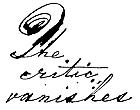
"Critical condition" by Scott Timberg L.A. Times 5/22/05

Calligraphy by Elvis Swift/For The Times
A must read! http://www.calendarlive.com/galleriesandmuseums/cl-ca-critics22may22,0,4263605.story?coll=cl-home-more-channels
May require registration but is free of charge.
Sunday, May 22, 2005
Sunday's thoughts
Today marked the 90th birthday of a Seattle musical icon, Vilem Sokol. My wife and I were happy to take part in the Mass at St. James Cathedral that honored him. No less than seven daughters of his were playing in the orchestra, each one an accomplished musician. I hope this surprise made the birthday boy happy. Without Mr. Sokol the Seattle Youth Symphony would have never developed into the important, large institution it is today, and a lot of violinists would not have had their all-important early training. When the time comes for him to leave this world, I’m sure there is an orchestra of little cherubs waiting for him in Heaven.
As I have expressed before, I am no great fan of organized religion. I don’t like to be told how to worship our Creator; my religion is something personal in my heart. However, there are a lot of people out there who feel differently, and prefer to have the thinking done for them; the sheep need their shepherd. This congregation has added an element that makes it easy to feel close to the Almighty: first rate, beautiful music as an integral part of the service. Music is one language that unites all people and fabulous singing combined with splendid organ playing makes it possible to escape this world’s worries and troubles, and to have a truly spiritual experience.
While getting ready in the morning I discovered that all of my white dress shirts have become too big for me. I have lost over 30 lbs (15 kg) in weight, and my neck has shrunk as a result. My method was a simple one: I lost my appetite, and the pounds disappeared. I’m still working on the name for this diet, so that I can market it one day. This one is guaranteed to work on anyone.
One thought led to another and I remembered a concert tour to Warsaw, Poland, in the early 1970s, as a member of a small faculty group from the Sibelius Academy in Helsinki, which included our dear friend Ralf Gothoni, the present Music Director of the Northwest Chamber Orchestra. Poland was still very much a hard-line communist country at that time, and a consumer didn’t have much choice. Our guests took us to a famous duck restaurant in the rebuilt Old City. One didn’t have any say as to what part of the duck ended up on the plate: with my luck I got the neck. Not much meat around that gullet, I tell you.
It was an interesting trip and among other things I learned that the wife of the assistant dean of my school had six toes on each foot. No, this knowledge didn’t come through personal discovery; her singer husband was rather proud of her being different. Then one night there was loud knocking on the hotel room’s door at around 2 in the morning. I got up to see what the reason was, and there stood the desk clerk from the lobby with a voluptuous woman dressed in a fur. I tried to tell him that he must have made a mistake, but he spoke only Polish and persistently tried to push the smiling lady into the room. Finally my ex-wife woke up and came to find out what all the commotion was about, and the visitors quickly disappeared. No, this is no Polish joke.
As I have expressed before, I am no great fan of organized religion. I don’t like to be told how to worship our Creator; my religion is something personal in my heart. However, there are a lot of people out there who feel differently, and prefer to have the thinking done for them; the sheep need their shepherd. This congregation has added an element that makes it easy to feel close to the Almighty: first rate, beautiful music as an integral part of the service. Music is one language that unites all people and fabulous singing combined with splendid organ playing makes it possible to escape this world’s worries and troubles, and to have a truly spiritual experience.
While getting ready in the morning I discovered that all of my white dress shirts have become too big for me. I have lost over 30 lbs (15 kg) in weight, and my neck has shrunk as a result. My method was a simple one: I lost my appetite, and the pounds disappeared. I’m still working on the name for this diet, so that I can market it one day. This one is guaranteed to work on anyone.
One thought led to another and I remembered a concert tour to Warsaw, Poland, in the early 1970s, as a member of a small faculty group from the Sibelius Academy in Helsinki, which included our dear friend Ralf Gothoni, the present Music Director of the Northwest Chamber Orchestra. Poland was still very much a hard-line communist country at that time, and a consumer didn’t have much choice. Our guests took us to a famous duck restaurant in the rebuilt Old City. One didn’t have any say as to what part of the duck ended up on the plate: with my luck I got the neck. Not much meat around that gullet, I tell you.
It was an interesting trip and among other things I learned that the wife of the assistant dean of my school had six toes on each foot. No, this knowledge didn’t come through personal discovery; her singer husband was rather proud of her being different. Then one night there was loud knocking on the hotel room’s door at around 2 in the morning. I got up to see what the reason was, and there stood the desk clerk from the lobby with a voluptuous woman dressed in a fur. I tried to tell him that he must have made a mistake, but he spoke only Polish and persistently tried to push the smiling lady into the room. Finally my ex-wife woke up and came to find out what all the commotion was about, and the visitors quickly disappeared. No, this is no Polish joke.
Friday, May 20, 2005
What money cannot buy
Many Eastern philosophies teach that in order to be a holy person, one has to give up all his material possessions. Just remember Buddha or Gandhi. Even in the Western culture, the late pope had nothing in his name when he passed away. Mother Theresa did not live luxury, quite the opposite.
Here materialism rules. However, having money doesn’t mean one is a great person. Often the contrary is true. Rich people tend to be rather pompous and shallow, even unaware of the real world around them. And very few of them have earned their fortune by working hard.
So, money cannot buy happiness. It cannot buy loving, well balanced and healthy children, either. Yes, it can buy a nice dog, but most of us would choose great kids over oodles of poodles. Wealth can start a career, even in music, but it cannot buy talent, which at some point becomes a necessity. Publicity can be bought, but if an instrumentalist plays like a student, no amount of money can fix that.
Intelligence and wisdom cannot be purchased; neither can a clear conscience. The Roman Catholic Church tried to sell forgiveness at some point, but in a long run it failed. A person with a fat wallet can, no doubt, get better legal help than a poor person. It still cannot, in general, make you innocent or guilty. Exceptions do exist, as justice can be sometimes for sale, unfortunately.
Money can buy expensive hearing aids, but it cannot restore one’s lost natural ability to hear. Even the most extraordinary violin will sound like a flute sooner or later, due to the loss of overtones. A rich visually impaired person cannot enjoy the paintings in a museum, even if he/she has donated the works there.
And money cannot buy a lasting, loving relationship. On the contrary, wealthy people tend to divorce often. I personally knew a Croesus who had had eleven wives. On the other hand, less financially affluent couples can have a wonderful and rewarding relationship, lasting a lifetime.
Rich individuals like to give often the impression of being great philanthropists, and in truth, are very important for this country’s education and arts. But how much more meaningful is a modest donation from someone who gives from his/her heart, knowing that this will have to mean a sacrifice somewhere else. These people are our true heroes.
Here materialism rules. However, having money doesn’t mean one is a great person. Often the contrary is true. Rich people tend to be rather pompous and shallow, even unaware of the real world around them. And very few of them have earned their fortune by working hard.
So, money cannot buy happiness. It cannot buy loving, well balanced and healthy children, either. Yes, it can buy a nice dog, but most of us would choose great kids over oodles of poodles. Wealth can start a career, even in music, but it cannot buy talent, which at some point becomes a necessity. Publicity can be bought, but if an instrumentalist plays like a student, no amount of money can fix that.
Intelligence and wisdom cannot be purchased; neither can a clear conscience. The Roman Catholic Church tried to sell forgiveness at some point, but in a long run it failed. A person with a fat wallet can, no doubt, get better legal help than a poor person. It still cannot, in general, make you innocent or guilty. Exceptions do exist, as justice can be sometimes for sale, unfortunately.
Money can buy expensive hearing aids, but it cannot restore one’s lost natural ability to hear. Even the most extraordinary violin will sound like a flute sooner or later, due to the loss of overtones. A rich visually impaired person cannot enjoy the paintings in a museum, even if he/she has donated the works there.
And money cannot buy a lasting, loving relationship. On the contrary, wealthy people tend to divorce often. I personally knew a Croesus who had had eleven wives. On the other hand, less financially affluent couples can have a wonderful and rewarding relationship, lasting a lifetime.
Rich individuals like to give often the impression of being great philanthropists, and in truth, are very important for this country’s education and arts. But how much more meaningful is a modest donation from someone who gives from his/her heart, knowing that this will have to mean a sacrifice somewhere else. These people are our true heroes.
Thursday, May 19, 2005
Ten Commandments
A great deal of controversy has been in the media regarding displaying the Ten Commandments in court houses and schools. Great many people would like to forget the principles of our Constitution, including the separation of church and state, and create a new fundamentalist America. That is exactly what even more of our 1.3 billion Muslim counterparts are keen on doing in their part of the world. The Age of Reason seems to be gone forever.
The Ten Commandments cover a lot of ground, telling us not to kill or steal. “You shall not covet your neighbor’s wife… or his ox or his ass…” Curiously absent is lying. The only reference to it is “You shall not bear false witness against your neighbor.” This seems more like a legal issue, not condemning lying per se.
We have become a society of liars. We are more willing to accept lies than the truth that might be upsetting to some of us. Nowhere is it as obvious as in politics. People turned to Fox News during the beginning of the invasion of Iraq, just because their coverage seemed to make this country the most victorious, and constantly reminded us how justified the war was, due to the imminent threat from weapons of mass destruction. Just remember the last presidential election. People who never have even met Kerry testified on television ads that his war injuries amounted to nothing. During the Vietnam War (sorry, Conflict), our military forces claimed to have killed more enemy combatants than the population on North Vietnam was. What a miracle that those dead people were then able to defeat us. During the Cold War years I sometimes listened to a propaganda station transmitting from Portugal. They played the opening of Beethoven’s Fifth on the timpani, then a deep male voice would announce slowly: “The West can, and will, win”. All propaganda is based on lies. Why we are so ready to be so gullible remains a mystery to me.
An honest politician is an oxymoron as a term, and we are willing to accept that as a fact. Promises are easy to make but hard to keep. And isn’t everyone running for an office more interested in making his/her opponent look bad, no matter how, instead of trying to convince voters that the candidate deserves their vote on his/her merits and ideas alone? What about the rest of us? How many cheat on their income taxes? What about colleagues who give expensive music lessons and insist on being paid in cash, not to leave a trail? It is easy to manufacture phony meeting notes or other documents. Enriched uranium from Niger, anyone? Honesty doesn’t seem to be a desirable character any longer.
Having come from a family where the greatest sin to my strong-willed mother was lying, I have accepted the same philosophy and passed in on to my children. Sure there are times when telling the truth might not be wise under the circumstances, but one can in that situation be quiet, instead of coming up with something untruthful. Often silence is golden.
The Ten Commandments cover a lot of ground, telling us not to kill or steal. “You shall not covet your neighbor’s wife… or his ox or his ass…” Curiously absent is lying. The only reference to it is “You shall not bear false witness against your neighbor.” This seems more like a legal issue, not condemning lying per se.
We have become a society of liars. We are more willing to accept lies than the truth that might be upsetting to some of us. Nowhere is it as obvious as in politics. People turned to Fox News during the beginning of the invasion of Iraq, just because their coverage seemed to make this country the most victorious, and constantly reminded us how justified the war was, due to the imminent threat from weapons of mass destruction. Just remember the last presidential election. People who never have even met Kerry testified on television ads that his war injuries amounted to nothing. During the Vietnam War (sorry, Conflict), our military forces claimed to have killed more enemy combatants than the population on North Vietnam was. What a miracle that those dead people were then able to defeat us. During the Cold War years I sometimes listened to a propaganda station transmitting from Portugal. They played the opening of Beethoven’s Fifth on the timpani, then a deep male voice would announce slowly: “The West can, and will, win”. All propaganda is based on lies. Why we are so ready to be so gullible remains a mystery to me.
An honest politician is an oxymoron as a term, and we are willing to accept that as a fact. Promises are easy to make but hard to keep. And isn’t everyone running for an office more interested in making his/her opponent look bad, no matter how, instead of trying to convince voters that the candidate deserves their vote on his/her merits and ideas alone? What about the rest of us? How many cheat on their income taxes? What about colleagues who give expensive music lessons and insist on being paid in cash, not to leave a trail? It is easy to manufacture phony meeting notes or other documents. Enriched uranium from Niger, anyone? Honesty doesn’t seem to be a desirable character any longer.
Having come from a family where the greatest sin to my strong-willed mother was lying, I have accepted the same philosophy and passed in on to my children. Sure there are times when telling the truth might not be wise under the circumstances, but one can in that situation be quiet, instead of coming up with something untruthful. Often silence is golden.
Subscribe to:
Posts (Atom)