 Our little one, Sarah, just returned from an eight day field and science trip in
 Sunday, May 21, 2006
Pineapple Express
Our little one, Sarah, just returned from an eight day field and science trip in 

Thursday, May 18, 2006
Thumbkin
 Once in a while something really strange appears even on the classical music scene. Among the recent top candidates is the situation in
Stude Ham from Outremont, Canada writes: It's time for NACO to part company with Pinky. He's very clearly overstayed his welcome, and in truth, is not the world's greatest conductor. No organization should have to deal with this kind of prima donna behaviour from any of its contracted performers. It's that type of thing which severely hurt the Montreal Symphony Orchestra, almost crippled the Toronto Symphony, and did damage to many other orchestras around the world..
Mentioning which, check out the article in today’s New York Times, or the
Tuesday, May 16, 2006
Painfully Yours
 Dreams can be both wonderful and frustrating. Sometimes they seem just as real as this state of consciousness we call being awake. People often say that when the time comes, they would like to die in their sleep. Perhaps we want that other reality to continue. Who am I to say it doesn’t? Last night I had an unexpected visit with a conductor, the late Hans Vonk. I have played a number of concerts under him, and people couldn’t stop complaining about him having become cranky, compared to his earlier years. One time I remember him interrupting a concert because a small child in the audience was crying, and asking that the unhappy young listener be removed from the hall.
Sunday, May 14, 2006
Hungry for Culture
 Last month the Finnish Symphony Orchestra Association announced that during the previous year there had been a record number of listeners for the country’s orchestras, a total of over one million. Finland, whose population of 5.2 million is that of Minnesota and considerably smaller than the state of Washington, has 13 professional symphony orchestras, 1 opera orchestra, 8 professional chamber and semi-professional orchestras, and 7 other orchestras. No wonder the country is able to produce so many world class conductors, instrumentalists and singers (think of all those solo opportunities!), not to mention composers. A total of 96 premieres of Finnish works were performed, including 10 symphonies and concertos each. Since most of the halls are much smaller than in the U.S., all this translates to about 1,800 performances. Conductors rotate between orchestras, or go overseas, and audiences have a fresh face, other than that of a visitor, to meet every few years. Perhaps that fact is an important reason behind those impressive numbers. Even orchestra musicians seldom stay in one ensemble for the life span of their careers.
Yet even Finland suffers from financial problems. The National Opera, having moved to their new home in 1993, is suffering from them the most, as that art form is the least cost effective of all. The hall seats only about 1,300 which is considerably less than what one is accustomed to here. As they have a full time orchestra of their own and even the chorus members are salaried, the organization employs around 600 people. Expenses in the country are higher than ever since joining the European Union and it is hard to find additional funding for the arts. Traditionally the American style ‘rich pay for it and decide what is done, how and by whom’ doesn’t exist there. Music and other art forms are for the people, paid by the people in the form of taxes. The opera company has to tighten its belt and probably make its employees take unpaid leave for short periods of time. Not to worry: unemployment benefits will cover most of the loss.
Summer is almost here and so is the festival season in Finland. It seems like every town, no matter how small, is capable of creating one of these special events, which range from music to dance, theater to visual arts. The official Finland Festivals has 80 member events, ranging from one week to several. It is a large number when one remembers how short the summer season is: about two and half months. One thing the Finns have in common with Americans: in both countries people are willingly fooled to thinking they are getting something better than ordinary, just because the event is called a ‘festival’. I am not complaining, as whatever makes people happy, let it be so.
But not to put us down: we, too, have culture; no less than eight active varieties in Cascade Fresh Yougurt, according the Seattle company's web pages.
Babbitt's Feast
 Happy belated 90th Birthday, Milton Babbitt!
Happy Mother’s Day to all mothers out there, especially the deserving ones!
Thursday, May 11, 2006
Local Wisdom, Or Lack Of
 Driving back to town today made me once again realize how nature has blessed this town, Seattle. I can’t think of too many other populated places as pleasing to the eye: water, evergreens, mountains, islands, you name it. Perhaps that is why it has also become a city where people like to keep things status quo. Just in today’s mail we got a car license renewal form, with $362 going to tax for a Monorail that will never be built. In another place people would be up in arms but not here. Politics are liberal here, but surprisingly little gets accomplished. Big money decides how things are done. One would think that planning a town would be up to the city council, but here a high-tech billionaire is able to erect huge buildings, and even a part of town, South Lake Union, on his own. People seem to think of this place as a giant retirement community: the same faces remain in important positions for a generation and nobody questions the wisdom in it. No fresh blood needed here: after all, why would we want to change anything? This was the case with the Monorail project, too. It was voted on time after time and finally rejected. It was such a waste of time and money, and we will be paying for nothing for a long time to come. Mass transit relies on the same crowded freeways and arterial streets as it has for decades. Perhaps the skyrocketing gasoline prices will force people to act. But it will take a long time to get the infrastructure in place for anything different. Right now it’s time to play the Monorail game again with the Alaskan Way Viaduct, the crumbling semi-freeway between downtown and the waterfront. How much easier it would be to have a strong leadership that would just decide how it is done, for better or for worse.
 I had dinner last night with some buddies who asked me precisely the same question--and suddenly, I had an answer. Suddenly, I knew *exactly* why nobody pulls the emergency brake on runaway trains like the UMPC.
In my younger days, I was a Broadway theater conductor. I worked on my share of flops. And I remembered a couple of times when *everyone* knew that we were on a sinking ship. Any one of us--cast, crew, orchestra--could have told the show's creators that we had a turkey on our hands.
But nobody did.
First, because we were employees; it'd be horribly presumptuous and rude to say something like that to our employers. Second, we needed the job as long as it lasted. Third--well, what if we were wrong? Shouldn't we trust our leaders to know what they're doing?
So: my sympathy to those on the Microsoft ship who knew that the UMPC was headed for an iceberg. And to their bosses: Um, maybe you should read some of those Microsoft blogs...
Never mind the Ultra-Mobile PC. There is a wisdom here to be applied to many things in life.
Wednesday, May 10, 2006
How Are We Doing?
Recently I got email from a smart media professional in
These are harsh words but give reason for serious evaluation. We cannot deny that
Tuesday, May 09, 2006
Delta No More
I have seldom flown without having to carry a violin with me. I can count with one hand any incidents regarding the extra carry-on, the case. One time SAS let me fly to Copenhagen with no questions asked, but gave me trouble on the short hop from there to Helsinki. After a minute-long argument I was allowed to board, and the same has been the situation all over. Just last week my wife flew Northwest Airlines to Michigan and back, with the same setup, and was treated very cordially by everyone. Even smaller prop planes have never presented a problem. No wonder she was in tears and upset by the treatment at the Delta counter this morning. At least the personnel in Delta's club room was sympathetic with her.
A lot of us have to fly with musical instrument because our work, or school, demands it. What is a violinist to do if he/she is denied boarding because of the instruments he/she wants to keep with him or her? At the rate checked luggage gets mishandled, misplaced and even totally lost, only a complete fool would let the airline be in charge of a violin case. Who would take financial responsibility for a loss of the fiddle or damage to it? What are we supposed to be playing on if something bad happens, even a delay? I know that the American Federation of Musicians has issued letters with the blessing of the federal authorities regarding this issue, but at the end, it is up to the individual airline and the person, in this case the moron, at the gate to do as they please.
Luckily we have a choice to fly on whatever airline we prefer. In our case it won't be Delta any more (although I must admit this was the first time that they have given either of us this kind of trouble). This was an award ticket worth 50,000 miles; the problem is what to do the with remaining 350,000 frequent flier miles with them. I better decide quickly as the airline itself has been very close to having shut its operations down for good. One would think that Delta Airlines would try extra hard to win back the trust of their customers, but that obviously wasn't the case this morning at SeaTac. I wrote a complaint to the company in an email; it will be interesting to read what they reply.
I guess there is truth in the saying that if we were meant to fly, we would have been given wings.
Thursday, May 04, 2006
Of CPF and Conducting
 A few weeks back a colleague called me, laughing about a story in a daily. The article had described what a concertmaster’s requirements are: not only are they expected to rehearse the orchestra, or at least the strings (although it was unclear when and how this would be possible), they also had to be auditioned with their drinking skills, at social gatherings. This is what I call CPF, the Cocktail Party Factor. Juilliard and other schools, take notice: perhaps you better hire an experienced bartender to give classes in meaningless chit-chat. It is unclear if this brown-nosing ability also produces a dark sound of the same color, another requirement. It is unlikely to boost one’s intelligence, however, also needed. Granted, I don't drink, but in other areas I might be overqualified: after all, the London Times once claimed that I had 'an impressive depth of sonority', and my IQ was the highest the tester had ever measured.
 The person, who inspired me to write this, sounds like a very insightful person, and talks about his desire to treat musicians with great understanding and ‘utmost respect’. I didn’t know such wonderful people still existed, although I have crossed paths with a few, such as the late Hermann Michael. I want to wish all the best to such a conductor, as an orchestra will be blessed to have a human being like that at their helm.
Wednesday, April 26, 2006
Another Loss
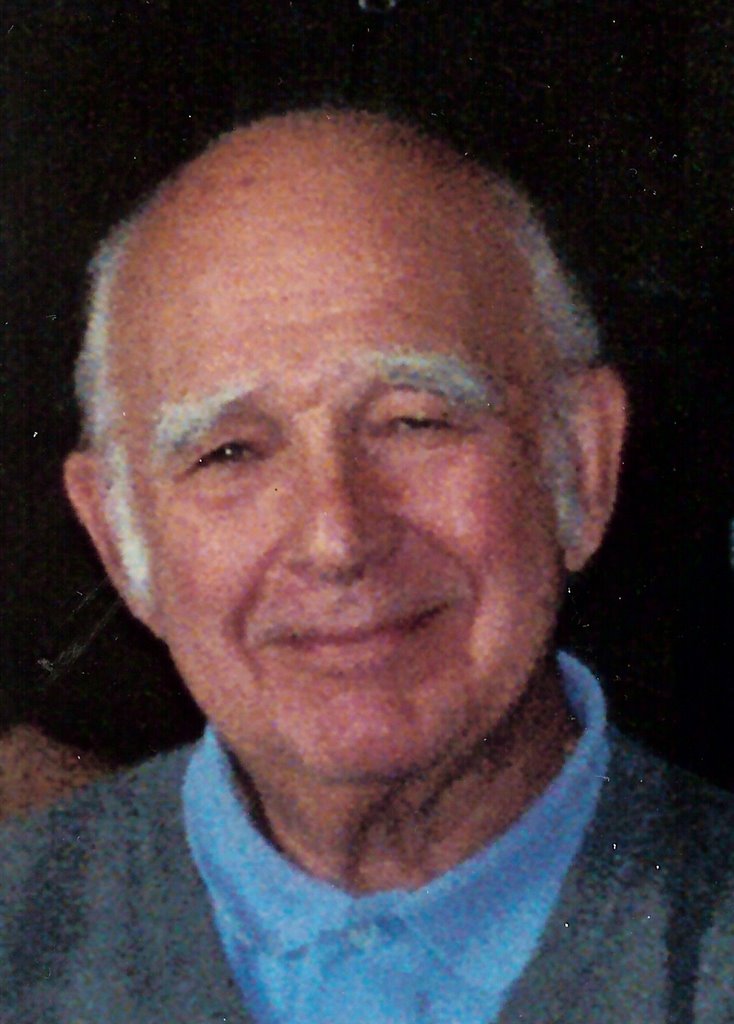 Death of the Northwest Chamber Orchestra didn't only only harm its musicians, it also hurt the audience. They no longer have an opportunity to see and hear the genius of Ralf Gothóni, nor the orchestra's longtime principal conductor Joseph Silverstein. Mr. Silverstein is one of the icons on the American music scene: a fabulous violinist, chamber musician and equally at ease on the podium. I will never forget listening to a performance of the Tchaikovsky Violin Concerto on the radio years ago. The playing was absolutely phenomenal, full of old-school beauty and totally faultless technique. I was almost shocked when the soloist was announced. I knew that Mr. Silverstein played well, based on his reputation and recordings of orchestral solos, but this was absolutely world class. By this I don't mean to use that term as one often hears these days (superlatives come cheap at least in this town) but in the real sense of the word. Later I, of course, heard him play live many times and every time absolutely immaculately. I have never heard better or more beautiful Mozart on this continent; the phrasing is just as it should be and overall playing without peer. Although he is still active as a violinist and chamber musician, he is also teaching in Philadelphia and Boston. I hope the students at Curtis and the New England Conservatory understand how lucky they are if they get to study with him.
 Mr. Silverstein has a long conducting career as well. While concertmaster in Boston for 22 years, he was also their assistant conductor and later became the Music Director of the Utah Symphony in Salt Lake City for 15 years. Rumors were then that the job almost went to another conductor, but the Mormon leadership had problems with the candidate's lifestyle. At the end they got the better deal, I'm sure, and the orchestra developed into a fine group. I would like to say 'world class' again but that expression is so misused that it has lost its meaning.
I got a very nice letter of recommendation from Mr. Silverstein, something I truly treasure. In it he states: "I have been familiar with the playing of Ilkka Talvi for many years. The discography of [...] is a fine showcase of his playing and leadership. His background is a veritable "who's who" of the 20th century as it includes studies with Ivan Galamian, Jascha Heifetz, Ricardo Odnoposoff, and other prestigious teachers. I would characterize his playing as technically brilliant and stylistically elegant. In the many performances and recordings of his that I have heard there has never been an instance when I felt that there was a lapse of good taste."
Getting such compliments from a true master musician means a lot to me, to the point that I almost blush.
Thursday, April 20, 2006
Fear or Inspiration?
 In raising a family, education, relationships and the workplace, there are two main ways of achieving results: either through fear or inspiration. Of the two, fear is the easier route. Your children learn not to do something because they are afraid of being punished. A student studies hard because of the fear of making mistakes, or having the teacher get mad at him. In many relationships, including marriage, one of the partners accepts the submissive role, and does what the other one demands, in order not to be rejected, or in many cases, assaulted. In the workplace, a boss can make his subordinates work hard, out of fear of being fired, demoted or humiliated. This can work to a point but at a price: children who leave home are not likely to return home often, a student ends up hating the subject and the teacher, the abused spouse finally gets the courage to leave, and the stressed worker obviously is constantly looking for another job opportunity.
The inspirational route, without the fear factor, is far more demanding. Your child has the option of doing something that he or she knows is right or wrong. A student with an inspiring teacher will look forward to his/her classes and lessons, even when there might not have been time to prepare adequately every time. In a relationship people want to be with each other because it is inspiring. Yes, it works even in a marriage long-term. And it is possible to be excited to go to work when one knows that his or her effort is appreciated by the boss and coworkers as well.
Being a source of inspiration is not easy. One has to be loving, caring and understanding beyond the 'norm' and constantly make an effort. One has to be open to admit his own faults, yet show an enthusiastic desire to achieve a higher level in whatever the subject is. A child looks at the parent for an example, a student at the teacher for the same. A partner in a relationship may not always do the right thing to please the other, and everyone has their moods and weaknesses, yet knowing that one is always accepted as he or she is, means, without exception, harmony and lack of fear. At work one gives his best and utmost when the effort is genuinely appreciated, not just expected.
Monday, April 17, 2006
Uncle Milton Once More
 There were at least two wonderful and interesting obituaries of Milton Katims on the other side of the Atlantic, in the Guardian and the Telegraph. Both are worth reading and they talk about Milton's peaks and pitfalls in Seattle. A person may no longer be with us, but his words and music still live.
Here is a copy of a letter Milton wrote a year ago and wanted it published. Somehow it had accidentally disappeared from my blog. In the letter Milton explicitly defines the role of a concertmaster which may appear quite different from what one reads in the dailies. Milton was a musician and string player par excellence, and as such he surely knew what he was talking about.
May 6, 2005
With admiration
[Milton]Milton Katims
Sunday, April 16, 2006
Information Highway?
 Americans are notoriously unaware of the rest of the world. Especially if one lives away from the coastline, news about anything outside of the country's borders seem unimportant. Yes, we talk about Iraq, Afganistan and now Iran, and we know that just about everything in a Wal-Mart comes from China. Our electronics are from Japan which also designs our favorite automobiles. Yet put Joe Shmo in front of a globe or a standard map and he will have difficulties in identifying these places without studying names of countries and cities carefully.
Time has come for this nation to take responsibility for the global mess we have helped to create. The warming climate is affecting us as well as others; the bird flu will reach us in no time. Gasoline is climbing in price but do we even know where the crude oil is coming from? That geography, ecology and world affairs are not taught in schools early on is inexcusable. Most of the news we read or watch seem centered in the U.S., and often only serve the interest of our government and politicians, plus, of course, big business.
Since the school system will not be changed overnight, what can we do to educate ourselves? By carefully selecting our sources of information is a good start. You cannot expect to learn the truth by watching Fox News, and even CNN no longer offers an unbiased view. Personally I turn to the internet and read what people in different countries think. We do get the New York Times, which is a pretty good newspaper, even if its tainted articles helped us to get into the frenzy of invading Iraq. Actually, I prefer that paper's and other publications' joint production the International Herald Tribune, which thankfully is available on the web. I used to get the print edition of the Christian Science Monitor but now subscribe to their online PDF version. This publication is probably the most neutral and best informed paper available in this country. It is rather small in size, so obviously it cannot cover many topics. They put out a marvelous email newsletter in which one can read opinions from leading papers of the world. The Los Angeles Times is also on my list: it has come a long way from the provincial paper it was when I first started reading it in the late sixties. The Guardian's newsletter gets read every day and I also try to read the Times from London. Perhaps my favorite news source is the BBC which has numerous sites serving different populations, such as Mundo for the Latin world (great for brushing up your Spanish!). Obviously I also carefully read Finland's leading daily, Helsingin Sanomat, for which I pay an online subscription. They also present news in English, although those understandably are centered around Finnish events.
For many years I was a loyal reader of the Economist which produces some wonderful and insightful articles. However, during Bill Clinton's troubled times, the magazine openly stated that he should resign. Since I felt it wasn't the publication's business to try to decide who would be in charge in the White House, I canceled my subscription. Too many other leaders, whether politicians or in other civic positions, not to mention in the business world, have had their own Monicas, and yet their authority hasn't been questioned, even if it should have. The Clintons were subjected to a witch hunt from the very beginning, something the Republican party should not be proud of. The Economist should have had the integrity to stay out of it all.
Journalism is close to my heart because so many relatives have been involved in it: my father, brother and eldest daughter in the immediate family. Each one of them have obeyed the highest principals and never written or broadcast propaganda to serve as mouthpieces of a few. Silja, my daughter, just won her second national PASS award in the magazine category. Last year she shared it with The New York and Los Angeles Times Magazines; this year she didn't have to.
Of course, every journalist has an editor whose duties are to check the facts and truthfulness of content before the story goes to print. This is to protect both the publication and the people the paper is writing about, and also the reader by providing the most reliable information possible. It is obvious that some publications want to have a slant to a story and some editors simply don't always do their job. Just re-read a case (scroll down to June 22, 2005) involving yours truly from a year ago. Some star journalists in even the top papers have been fabricating stories, such as was the case in the scandal with Jayson Blair and the New York Times. As Slate put it: "What can you say about a trusted professional who makes stuff up and publishes it as fact?" As readers, we have a right to expect to see the truth on the printed page of a paper we pay for. It is a sad fact that public's trust in the media has diminished year after year. Reader's Digest shouldn't have become Reader's Indigestion.
Long live hyperlinks! ¡Vivan los enlaces!
Friday, April 14, 2006
Blessing
This country is a wonderful mix of people, although there has always been a lot of pressure to assimilate. Obviously, a grown man or woman is not going to be able to do that to the same extent as a child. Parents wanted their children to fit in, gave them American names and didn't want to pass on their native language. This was especially true in the earlier part of the 20th century. "John" would certainly not have been a choice for a son's name in the Pale: here it became very popular as it didn't carry the same label attached to it as 'Mordechai'. Often parents and their children grew so much apart that they couldn't even verbally communicate with each other well enough to remain close. Recently much of this has changed, and especially Latinos and people from different parts of Asia are proud of their heritage, and make sure their children have a tie to the old homeland. I personally could have done better: out of my four daughters only the eldest speaks Finnish completely fluently, the second one fairly well, but the two youngest only know words and phrases. At least they have visited in their second homeland often, and know the customs and understand the special qualities their people have.
What usually sets an immigrant student apart from an American is their work ethic and desire to learn and learn well. As classical music and playing the violin may not be part of their background, being at ease with our Western music can be in some ways be more difficult to them, but most of them overcome this in no time. As a teacher I feel more challenged but I simply love that. I just wish I could learn about their music and culture as much as they learn about ours. I'm doing my best and have always enjoyed listening to songs and other works from all over. Since early on, I was a short wave radio buff, and I would spend hours listening to faraway exotic radio stations. These days it is easy as you can hear them on a web stream, as clearly as your local stations.
This country has not always treated its immigrants, legal or illegal, very well. The Chinese were singled out for a long time: they couldn't become citizens or own property, although we had brought them here to build railroads as they were willing to work under conditions our own people wouldn't. The last couple of weeks have seen massive demonstrations against proposed legislation that would make criminals out of people here without legal documents. Yet, like the railroad builders, they work the jobs we wouldn't touch. Without them our economy would completely collapse, and it isn't doing so well at this point anyhow. People from the Middle East are treated with suspicion, even when they have been born here, and anyone dark-skinned is lumped easily in the same category. Many stories are simply heartbreaking, but it is not easy to find them in the media. If you have the time, read this article by my journalist daughter Silja, who has dedicated her life to writing about social injustice.
Our differences are our greatest blessing.
Wednesday, April 12, 2006
For the People, by the People
Every once in a while I end up going to hear a community orchestra, sometimes out of curiosity, having been asked to attend, or having a friend or family member playing as soloist. In an earlier blog entry (March 26, 2006) I divided orchestras into different categories, based on their importance, but left this important group of musicians purposely out of the story. Like their full-time professional counterparts, community orchestras can vary from excellent to awful. Most of them do fill their function rather well though. This last week I was pleasantly surprised by a local group which performed admirably. To most people in the near-capacity audience there would have been no difference between this orchestra and a professional one. Better yet: this was music for the people, by the people, performed by their family members, friends or neighbors. I paid close attention to the musicians. It seemed to me that all of them were truly enjoying their music-making, and they wanted to show their audience what they were able to accomplish. This was not playing by snobs, for the snobs: the unpaid musicians must really love what they do to give up so much of their time for this cause. Ticket prices were cheap, so an entire family could easily afford to come to listen; the percentage of young audience members was high. Four or five different live concerts a year is plenty enough for most friends of orchestral music. If they want more, it is all too easy to put on a cd or listen to a classical music on FM, cable, satellite or internet station. It would be difficult to explain to that audience why millions should be spent on something they get for practically free.
Of course I have a biased view in this matter. After all, I was playing in such an orchestra before my 6th birthday, as my father was the conductor. We had some excellent concerts as many of the principals came from the country's leading orchestras, such as the Helsinki Philharmonic and the Finnish Radio Orchestra, for the dress rehearsals and concerts, and the group itself had some amazingly talented instrumentalists, who had gone to other fields, as was the norm those days. Everyone got along famously, which in that one-company town meant people at the very top and your ordinary lowly workers. Music was what they had in common, and in that situation they were equals. Well, my native country changed, got rich, and soon such idealistic organizations were history. After my father retired from conducting his beloved orchestra, they folded in a couple years. Nothing nice and wonderful seems to last forever.
Obviously a ballet company cannot expect to find capable dancers in their community for free, and Wagnerian opera singers are not that common, either. Instrumentalists are plentiful, however, as so many excellent musicians have either switched careers or gone to a non-musical field to start with, knowing well what an unpleasantly difficult field being a professional musician is. If we encouraged these community orchestras and gave then more of our support, perhaps we wouldn't need all these regional expensive orchestras in every city and town. How about having up to ten truly great symphony orchestras in the entire country, and they would spend most of their time touring all over? It certainly would be more interesting to the listeners than seeing the same faces and hearing the very same music-making year after year, sometimes with no change for decades. Certainly an enormous amount of money would be saved, and some of it could be spent on bringing in interesting chamber music ensembles and recitalists. Isn't it a fact that many listeners go to an orchestra concert just to hear the soloist and then leave the hall before the Bruckner? Somewhere I remember seeing a string teacher show up with his more advanced students whenever there was a well-known fiddler playing a concerto, and carefully writing down bowings and even fingerings. After intermission they were never to be seen. Certainly this was a less expensive and more convenient an approach than taking lessons from the artist, or going to his/her masterclass. Had there been a video dvd of the piece by the same artist, the teacher and the students would have stayed home. I am in no way condemning this pedagogue's action: what better way to learn than to see with your own eyes and hear with your own ears. Great playing is worth a million words. I just don't think an entire program should have been put together by the orchestra just for this reason. This might have been a cheap lesson for these listeners in question, but at a great expense for a lot of others.