Sunday, August 06, 2006

No Winners


It felt good to spend a few days in beautiful and peaceful Victoria, British Columbia, away from nothing but terrifying news on the home front. The shooting of six women at the Jewish Federation in downtown Seattle was just one frightening result of the chaos that is spreading in the Middle East. As we learned that the suspect had randomly chosen a Jewish organization from the directory, it could as well have been another one where our 19-year-old had been volunteering as an intern before leaving for Mexico. What could have driven a U.S. citizen of Pakistani origin to commit such a horrendous act? His roots are in a ‘friendly’ country, he has nothing to do directly with Arabs or Iranians, yet watching the grizzly images that our news channels transmit 24/7 obviously pushed him over the edge. He is not an isolated case, but rather a symptom of the deep-rooted disease of hatred that is spreading like a most vicious cancer.

War is a strange game: there are no winners, just losers. In addition, the traditional rules of war have been scrapped. Instead of armies fighting each other on the battlefield, one’s enemy no longer has a uniform and hides in the midst of civilian population. Perhaps every army ought to transform itself to a militia or guerilla organization and forget about uniforms or any other traditional symbols of the military. What if Israel equipped itself with thousands of similar rockets that the Hezbollah uses and utilized them instead of the traditional methods that have proven to be surprisingly ineffective against the invisible enemy? Would the world’s opinion be more favorable? That would at least be more of an-eye-for-an-eye tactic and make the Lebanese militants taste their own medicine. With the large-scale destruction caused by aerial and heavy artillery bombing, there are too many uneducated people rooting for the seeming underdog, the guerillas of Hezbollah.

As I have written before, the rapidly worsening situation in Iraq (as well as in Afghanistan) has moved down in the list of important news. Our two top generals from Iraq openly admitted that the scene there has never been this bad. Mr. Rumsfeld sounded completely out of touch with reality when he insisted that the U.S. must stay in Iraq, otherwise Muslims will conquer Spain and the Philippines. What a surreal statement indeed! The N.Y. Times published a good editorial on this just two days ago. Many experts don’t see any other direction for Iraq than the country being split into three. One mustn’t forget that all borders in that corner of the world were artificially created by Western colonial powers. Those sheiks, caliphs and other local rulers that had provided favors to the former masters were rewarded by putting them in charge of ‘countries’. Israel is an exception, as few really wanted it there in the first place, in spite of the Balfour Declaration of 1917. The persistent Zionists kept on moving to their ancestral land, and finally the country was ready to declare its independence in 1948, immediately followed by a war with its upset neighbors. Had their been no Third Reich, or if Great Britain and the United States would have accepted the Jews Germany supposedly was offering them, thus avoiding the horrors of Holocaust, perhaps there wouldn’t have been a mass exodus of Jewish people entering Palestine. Of course there are no ifs, otherwise the world wouldn’t be in such a mess. Just imagine how different the world would be today if the Supreme Court hadn’t voted on party lines to decide the outcome of the 2000 presidential election...

So, Canada treated me and my little one with genuinely friendly smiles and warmth. One wouldn’t expect such a difference in people but it was very evident. Of course in a major tourist destination one anticipates visitors to be treated well, but even when shopping or dining with ordinary local denizens, nothing changed. Perhaps the fact that the country is not in a war helps people to relax, or it is possible that Canada, at least in that part of it, is more evolved and civilized. We enjoyed all the different bear statues around the city. We also saw a couple IMAX movies at the Royal B.C. Museum, one of which, the ‘Mystic India’, was very impressive, retelling the 1790s story of a young boy walking barefoot all across India for seven years and eight thousand miles. Anyone who has a chance should see it. What a powerful story, and what incredible scenes with a cast of 45,000! We walked away from the show feeling peaceful and enlightened. Every person involved in bloody politics and decisions that cause death and mayhem would learn from watching it: the only way we humans can coexist is by tolerance and honoring all life.

Tuesday, July 25, 2006

Heat


A rare heat wave in the Puget Sound area is finally over. Clearly I wasn’t made for a hot climate. Growing up in pre-global-warming Finland meant that I was more at ease biking to school at 20° below zero than sweating in an uncomfortable, almost 100° city. Yes, we Finns like our saunas and when inside, one can tolerate much higher temperatures, feeling great, but we always know it will come to a sudden end, plunging into a cold lake or even rolling in the snow in winter. Last night a cool breeze overtook Seattle rather suddenly and I fell asleep early, in relief. My dreams were even more fantastic than usual, but included some scary elements such as human sacrifice, no doubt a product of following the bloody television footage from conflicts in Iraq, Lebanon and Israel. I just read on the Independent that the Iraqis are seriously thinking of dividing the country into two, east and west. The Sunnis would have control of the west, and the eastern Shi’a part would become in a sense an extension of Iran, although formally a separate entity. This discussion left the Kurds out: surely there are many who would finally like to see an independent Kurdistan as well. Whatever it takes to calm that corner of the world down, let it be. Iraq as a nation was an artificial creation to start with. Forcing totally different ethnic groups to live under one flag is complicated at best. Just look at the former Yugoslavia: without Tito's iron fist the union crumbled in no time at all.

I have previously written about how little factual knowledge Americans in general have of the situation in today’s world. A few days ago I spoke with a well educated family member who was praising the White House for encouraging the Israelis to ‘squash’ Lebanon and Muslims in general. This Jewish person’s thoughts were based on raw emotions; she had no more knowledge of the real issues than the fanatic Muslims on the streets of many countries. Hamas and Hezbollah were one and the same, the Gaza Strip had magically moved from the Egyptian border into Lebanon, and mentioning the differences between Sunni and Shi’a Muslims drew a blank. Once again, I frankly believe that schools are not allowed or at least encouraged to teach geography. The more ignorant people are, the easier their opinions (=votes) are to manipulate, all in the name of democracy. Yet people live under the illusion that they know a lot about important issues. Yes, some do, but they are a minority, and often a thorn on the side of whoever is in power.

Why the heat felt so uncomfortable was also because it brought back so many unpleasant memories, of life in Southern California and so many wasted summers on the East Coast. The latter was work I felt obligated to do, and it was quite unsatisfying musically; mediocre at best. It was truly 'instant art' (just add water and mix!): three rehearsals bang-bang-bang and then two concerts. Some visiting artists were able to inspire the group to outdo themselves occasionally, though. The opposite was true as well: I particularly remember a big name conductor who hadn’t bothered to learn the opening work, a practically unknown composition, and got completely lost and in the first concert took the orchestra with him, at least those who mistakenly looked up. As nice and great as the musicians were as individuals, as a group the Mostly Mozart orchestra was suffering and miserable, for reasons I well knew but was unable to do anything about. I’m pleased that they are much happier now and able to enjoy music making, even in the heat. The music camp I was part of earlier didn’t fare much better in the satisfaction department, although I liked the teaching element of it. It was billed as the Waterloo Music Festival, but in truth was a student orchestra, fortified with faculty musicians and ringers from New York. Needless to say, it ceased to exist many years ago. Playing under boiling lights in an already-hot and humid tent made good use of my Finnish sisu. Sometimes it was fun watching some of the huge insects fly around during concerts, attracted by the bright lights, and wonder where they would land next. On at least one occasion the rain got so bad that nobody could hear the violin soloist, and the concert came to a halt. We certainly don’t get weather like that in this neck of the woods.

Had I known better and seen the future, I certainly would have turned all that work down and instead enjoyed a vacation every year, something I really never got to do. For over twenty years I managed to squeeze in a trip to the family’s summer home in Finland, but the time there was always limited, and with aging parents, and under the primitive although wonderful surroundings, filled with hard work. True, while living in Finland in my twenties, raising my first family, long paid vacations were guaranteed by law, but being young I was eager to do music camps and festivals, always traveling with the violin and playing. It is high time for me to learn the art of relaxing and enjoying what life has to offer.

As it was too hot to do anything else, I decided to use my logic skills and fixed the networking problem on my own, without having to make any more annoying calls to tech support. So, even the heat wave turned out to be a blessing in disguise.

Tuesday, July 18, 2006

Messy Democracy

One of mankind’s worst inventions is that what we call democracy. Giving an idiot or a truly ignorant person the same voting power as to the highly learned, intelligent and hopefully wise one is ridiculous. Of course in principal democracy is a noble idea, but so is communism. People are manipulated easily and votes bought. When was the last time a poor Mr. or Mrs. Smith was elected to an office of any importance in the U.S.? Campaigns are a game for the rich. Issues put in front of voters are too complex for most to understand, and it is next to impossible to get unbiased information on them. Making the opponent look as bad as possible is a standard tactic for any candidate, not trying to come up with new fresh, doable ideas.

This country has an urge to promote its variety of democracy as a model to the world. We are seeing the results in Iran, Iraq and Palestine, even Lebanon. Has anyone bothered to think that perhaps these people, a great percentage of whom aren’t even able to read, would have been better off with a different system, something they have been used to? Emotions run high in world’s political hotspots; few are willing to listen to a voice of reason. Palestine is a good example: we insisted that they have fair elections and democracy. When the unthinkable happened and a militant group that we consider a terrorist organization won, we simply didn’t know how to react or what to do. It is too late to state that we Americans and Europeans will not have anything to do with Hamas. By denying aid we are like sore losers, and are creating a perfect breeding ground for an endless number of future terrorists. People who go hungry and thirsty and have nothing to lose are easily persuaded to commit desperate acts. Without the election, PLO would be still in charge, and at least Israel and the West was having some kind of a dialogue with them. By taking part in a fair election Hamas for once did nothing wrong: they won because people voted for them. People have also given their support to leftist candidates in Latin America, most notably Hugo Chávez in Venezuela, and we are upset. Closer to home, the outcome of the Mexican election is still in dispute. Had the legal and illegal Mexicans in this country been able to vote, most likely the leftists would have fared better, but due to the strict and complicated absentee ballot system in Mexico, only something like one percent were able to cast their vote.

The Middle East situation is truly sad. I can well understand Israel’s desire to disarm their sworn enemy Hezbollah or at least weaken their ability to attack their country. However, the human suffering is hard to take, and innocents have become the victims. Our government has been too uninvolved in the area as they have been since the Clinton era; that much every expert I’ve heard has agreed on. Actually, I think the White House is quite pleased that the horrendous situation in Iraq is no longer front page news. Never mind that the number of casualties in that country is a thousand times higher than Lebanon and Israel. Suicide bombers killing 46 in a mosque barely make the news. Or are these explosions just like fireworks, set off by happy Iraqis to celebrate their new freedom and democracy? A developing pact of Shi’a fundamentalists in power from Iran to Lebanon, via Iraq and Syria, looks absolutely terrifying on the map.

A different kind of conflict is happening at the home front here. A longtime customer of Earthlink, I agreed to have them take over my second phone line and provide a promised extra fast 6 Mbps DSL on it. The previous setup worked perfectly: Qwest took care of the phone service and Earthlink provided the normal speed broadband. All our many computers were networked, no problem. On the day the service was switched the phone went dead and after talking for many hours to India it started working a few days later. The DSL was another story. The green light on the modem would come on and then disappear ten seconds later and this would happen continuously. I spent an entire day on the phone first talking to a hard-to-understand woman in India, and then to a nice and clear man from the Philippines. Finally I asked him to contact someone here locally, and the man from Covad told them instantly that our house is too far from the central to have the promised speed work. The speed was dropped back to 1.5 Mbps and I was finally able to connect to the Internet, at half that speed. However, there has been no way to make the network operate like it did before, even having had professionals come here to try to solve the problem. Essentially we are down to one PC and I dread having to spend another day talking to Earthlink’s technical support, where ever they happen to be this time. I’m also thinking of other solutions. With teenagers who are used to living with the web and a wife who is hard at work writing her book, I’m lucky to be able to check my email. I understand that outsourcing saves American companies a lot of money, but no person on the other side of the globe could have known what was obvious to a local technician. Globalization is another strange phenomena and I’m not certain it works any better than democracy.

On a more pleasant note, my daughter Anna is happy as a clam in Guadalajara and was placed in the second highest Spanish group. She will be able to take her political classes in Spanish unlike most of the others, unless they are native speakers. What a great opportunity this is for her, living with a Mexican family and being treated as a local.

Sunday, July 16, 2006

Deepening Crisis

It is not very long ago when the world celebrated Lebanon’s new freedom, after the Syrian occupation ended and the Israeli troops withdrew from the south. Before that the country had witnessed a long and bloody civil war which left much of Beirut, the capital, in ruins. All this was happening in a small country which in my youth was known as the Switzerland of the Middle East, a place where people of different religions and cultures could coexist peacefully. Unfortunately, the joy of peace proved once again to be short-lived.

As if the world wasn’t in enough of a mess already, escalating violence in areas surrounding Israel is getting out of hand. It is not hard to understand that citizens of that country have a hard time trusting their longtime enemies Hezbollah and Hamas, but, in my humble opinion, to start a war because of kidnapping of a few soldiers doesn’t seem like the right thing to do, at least without trying to give diplomacy a chance. The resulting blood bath on both sides is simply terrible. Of course it is nothing compared to the carnage in Iraq and Afghanistan, but here we are talking about a much more civilized part of the Middle East. Distances are so short that a rocket flying a few miles can cause great damage inside the other country. For the Israeli air force to bomb Beirut is as simple as if New York attacked Philadelphia. Does making the Beirut airport unusable prevent further attacks by Hezbollah? Of course not: the only ones suffering are ordinary civilians. I’m by no means taking a side against Israel; the official goal of both terrorist organizations is the destruction of the Jewish state, a sick principle indeed. But there has been a lot of international pressure from all major powers to change all that; however, after recent events in Lebanon and Gaza it is harder than ever to convince the Palestinians that Israel wants peaceful coexistence. Of course, returning the soldiers unharmed would have resolved the crisis, but militants are not known for common sense and good will, no matter what side they are on.

It is interesting to note that the Palestinian neighbor countries, namely Egypt and Jordan, don’t want to open their borders to let the suffering people in, even temporarily. Muslim brotherhood goes only so far, it seems. The West Bank was a part of Jordan for a while but the kingdom was more than happy to give it up. The pro-Western Hashemite rulers are constantly afraid of the increasing Palestinian population. Egypt certainly could help the suffering Gaza population more, but seems unwilling to do so. Perhaps there is enough unrest within Egypt itself as terrorist strikes there are frequent. Hezbollah is rumored to be financed by Iran and this is where we can blame ourselves. By invading Iraq and causing complete chaos there, the United States removed the greatest threat and competitor to Iran and helped it to become a new superpower for the region. With price of oil rising daily Iran can well afford to stick its thumb up the noses of the Western countries. Financing a guerilla group in Lebanon is good PR for Iran in the Muslim world, at least in the radical part of it, and the cost of it for them is insignificant.

The March issue of the Atlantic Monthly has an excellent article about the situation in Palestine, titled ‘The Checkpoint.’ It makes a very valid observation: “At the dawn of the twenty-first century, soldiers—Israeli, Russian, and American—are learning that the hardest thing is not taking control of a territory but attempting to administer it once you are there.” I think our leaders have finally realized that, too.

At some point my daughter Anna was thinking of going to Israel this summer, just like many of her Hillel friends. I’m relieved that she chose to go to study in Guadalajara, Mexico, instead, having left for there just yesterday. Not that the political situation in our southern neighbor country is comforting: the recent election is still being contested and mass demonstrations have happened and no doubt will just grow in size. At least Guadalajara is a more peaceful place than Mexico City but certainly they will see their share of the unrest. For a political science major seeing democracy at work should be of great interest. She will hopefully be able to visit Israel during a more stable period. I try to be an optimist and believe that one day peace will be a reality. It won’t happen overnight, but one must not forget that both Jordan and Egypt have established diplomatic relations with Israel, something that a few decades ago would have seemed impossible.

Shalom—Salaam

Saturday, July 08, 2006

For the Birds

This month’s Scientific American has, among other fascinating stories, an article on the vision of birds. It turns out that they are able to sense colors in the ultraviolet spectrum, having inherited four cone pigments from our common vertebrate ancestor. As mammals evolved, four was reduced to two, and later a third one came to be. All this means is that our feathered friends are able to see a vastly greater number of colors and recognize patterns where it all looks the same to us. There are a large number of birds in which we have trouble telling a female from a male as they look almost identical. Not so for them: with the added UV element added the differences become very clear. Of course we cannot even begin to imagine how birds and other animals sense the world around us: color is after all the product of the brain interpreting input from the eyes, not a property of light. Color-blind people have to make do with what nature has given them; we all seem to be in that position when compared to species that are more advanced than us in this department.

Seeing color is an interesting sensation. In many individuals it is closely connected to other senses. A person may see lights before the onset of a migraine headache or an epileptic seizure. Some of us see colors when listening to music or other sounds, like in my own case. Different pitches and keys are not only sensed by the ear: the brain also translates them into hues of color. Some music can be visually very pleasing, some other evoking ugly images enough to make one ill. I don’t know if this ‘gift’ is a blessing or a curse. People who are happy with just plowing ahead with whatever music they are listening to or playing are probably just as lucky as a person who can’t tell whether he is wearing a red shirt or a green one. After all, sensitivity can be a distraction: in music the most basic elements (loud-soft, fast-slow, short-long) are often all that seem to be required. Many leaders are ruthless and desensitized: when deciding to send soldiers to fight one cannot think of all the resulting suffering. There would be no wars if leaders had sensitivity and emotions; a conscience in other words.

The oldest crow in the world just croaked at the age of 59. It had lived all these years in captivity as a pet, having fallen out of its nest in a cemetery during a thunderstorm in 1947, never having been able to fly as a result of injury. That bird hadn’t seen ultraviolet or any other colors for a long time as it had been blinded by cataracts. Had Tata the Crow lived in Seattle instead of N.Y. State, based on this city’s rationale, he might have become a key figure for Boeing (a bird must be an expert in aviation even if he can’t fly), keeping his prominent role for all those decades (after all, with all those years of experience he must have been very insightful, even when blind). Who knows, perhaps he would have also become a star in the local music scene, a Ta-Ta. We all know what a magnificent singing voice a crow possesses!

Picture of 'Tata' by Kristine Flones

Sunday, July 02, 2006

Exciting Times

We are living in exciting times, least of which is not the soccer World Cup. Surely there have been some major upsets, such as all the favorite Latin American teams having been eliminated by the semi-finals, but there has been some wonderful playing by countries such as Portugal, not normally associated with the world’s top contenders. To our surprise, little Ghana managed to kick the mighty U.S. out of the games early on. Now we have four European Union members facing each other; they also all happen to be in the euro (€) monetary union, which some other, now eliminated, contenders (U.K., Switzerland, Sweden, Ukraine) are not. Is this perhaps symbolic of something? My daughter Anna and I are the soccer fanatics in the family and both of us prefer watching the games on Univision: the coverage is so much more intense and lively than on ESPN, and it is also good for our language skills. I feel sorry for Argentina’s goalie who was injured and replaced: had this not been the case, the outcome of the deciding game’s penalty kicks easily would have been different, in spite of Germany’s home field advantage. It was also surreal to watch England play Portugal and have the largely British spectators sings ‘God Save the Queen’ anytime their team had the ball and were advancing, or to have a plea for audience members to refrain from racial remarks before the Brazil-France match.

Today is another exciting day as Mexico holds elections. The presidential race will likely be a close one. I like to play with words and think that it would be interesting if an ‘Obrador Retriever’ would follow a ‘Fox’ in office, in true canine fashion. In spite of a large portion of Texans not knowing what foreign country is below their southern border, the development in Mexico is extremely important to the United States. Whoever will be the winner, he and the newly elected parliament will face enormous difficulties with widespread corruption, poverty and the volatile situation in the south. But Mexico also has tremendous potential and should be of great importance to us as of the two neighbors it is by far the more populous. Any solution to our illegal immigrant problem will have to have equal support of both governments, otherwise it will be totally ineffective.

There is excitement on the home front, too. July 4th is promising to be a beautiful day and we can enjoy the Lake Union fireworks right from our sundeck. Anna will be traveling to Guadalajara later this month to study in the university there for five weeks. Needless to say my daughter is as thrilled as can be about the opportunity. All of us here also have a strong feeling that something else incredible is about to take place, even though we don’t know what it will be. Positive thoughts are great and hope for a better world is priceless. If we only could undo our mess in Iraq, or at least bring our men and women home before more of them are killed or maimed. But let us forget about unpleasant realities for a little while and enjoy all the excitement in the air.

Happy Independence Day to you all! No matter how hard some powers try to block it, freedom of choice and liberty will prevail.

Tuesday, June 27, 2006

Happy 95th, Dad!


Six days ago, on the 21st of June, my father Veikko Talvi turned 95. Although his short term memory is at times problematic, this picture taken at his party proves that he still enjoys life a lot. Even having had prostate cancer for over 30 years hasn’t affected him as it has been kept in control with hormone therapy.

What an interesting life my father has had. He was adored and pampered by his mother, much more than his younger sister. My grandfather was capable of creating anything with his hands: my childhood home was filled with wrought iron lamps and light fixtures, and he even built several violin cases for me. My dad didn’t inherit any of these skills; they seem to have jumped a generation. Instead, he become very involved with the academic life in the Helsinki University and started researching local history, publishing a number of books over the years, some of which are used as textbooks in higher education. He was also a journalist and a respectable musician, both as a violinist and a conductor. During my childhood and until his retirement he worked for one of the world’s largest paper manufacturing companies as their head of publishing and public relations. Although he didn’t have a head for business (unlike my mother), he didn’t have to worry about money as he was well paid. An idealist, he would always do things for free if it was for a good cause. I don’t think any of his many violin students ever paid for their lessons. Although the well-to-do corporation would have given him a nice car to use, he preferred using our family car, never even charging for mileage.

The Winter and Continuation Wars (1939-40, 1941-44) were hard for everyone in Finland. My father had recently been married when fighting started and he was on the front, unable to get a leave, when my brother Tuomo was born. Just a couple days later the mother died and grandparents had to take care of raising the baby. A brief period of peace followed, but then war started again and my dad had to leave once more for the front lines. When I was growing up, he never talked about his experiences. As he was an officer and an adjutant to the commander of the regiment, he didn’t actually have to fire a weapon and kill enemies. This probably was a blessing as he wouldn’t have taken it lightly. Death was still all around him and sometimes he had to send a platoon for a dangerous assignment, knowing that many of the men wouldn’t return. One time a new soldier was waiting for instructions when a Soviet bullet went through his head, less than three feet from my dad. Later my father developed some heart problems and was sent back to a military hospital. This is where he met my mother Irja, a volunteer, and the two fell in love. Their marriage lasted for 55 years, until my mom’s death on the eve of my 50th birthday.

It is interesting to see what parallels there are in one’s life compared with his parents. Although I inherited my mother’s quick thinking and business sense, I also resemble my father with my willingness to teach and help, and his love for music. More than anything I enjoyed playing duets with him: we performed together numerous times when I was little. He didn’t force me to have a teacher as I was able to teach myself at first. I had observed my dad carefully enough to know what to do and how; my perfect pitch took care of the rest. He would listen to me practice, and then play a few card games with me, and afterwards I would practice more or we would play duos until late. He, too, had a long friendship with a man whom he trusted. About 25 years later this ‘friend’ showed his true colors, tried to defame my dad and even to destroy archived material, and to take credit for work my dad had done. This betrayal almost killed my father, and it took him years to get over it. However, wounds eventually healed and he was again busy doing more research and writing books even in his late 80s. It was always important for my dad to be recognized for his achievements. The regional central library in Kouvola has a small exhibit featuring my father's literary output, in addition to having a research room named after him. When he lived near there, he would visit the library almost daily, perhaps to admire his life's work. This is where we differ: I don't even own most recordings I've made. Perhaps a generation is skipped again, as some of the younger ones seem to be much like him, rightfully proud of their achievements.

I look forward to your 100th birthday, Dad!

photo by Silja Talvi

Monday, June 19, 2006

Stepping Aside

Last week the main news topic seemed to be Bill Gates and his decision to leave the reigns of the company he founded, Microsoft. Naturally with his wealth it is easy to retire and concentrate in philanthropy. Health and education for the world’s poor is obviously close to his heart, and being the richest man alive, he has the means to make a difference in this area. Also, he wants to be remembered as a great humanitarian, not just as someone who started a software company at the right time and place. But there is a much bigger issue behind wanting to step aside: the well-being and future of the very enterprise Mr. Gates had been a father to. After all, times have changed a lot from when IBM refused to see the potential in personal computers, and instead of creating an operating system for the then primitive PCs, gave the task to the little startup company of Mr. Gates and Mr. Allen, resulting in MS-DOS. Microsoft has had great success since, mainly with operating systems from Windows 3.1 on (the first versions were rather awful) and their Office software, a standard today with any company and institution. But times are changing and with broadband access to the internet everything in computing is very different from just a couple years ago. Microsoft needs people with fresh ideas and insight; otherwise the company could turn into a dinosaur and become extinct. It has already made a number of mistakes and wrong predictions in the past. Perhaps Mr. Gates realizes that he no longer can be the visionary his child needs and wants to give others the challenge. I salute his wisdom of stepping aside now, instead of growing old together with the corporation.

In Chicago, another famous figure is leaving his post. Daniel Barenboim just conducted his last concerts as the music director of the Chicago Symphony. Fifteen years at the helm of an orchestra is a long time, twice the norm for someone in that position in this country. The beginning of his tenure with the orchestra was somewhat rocky, but with time the musicians and Mr. Barenboim learned to see eye to eye and understand each other well. His decision to leave certainly was not caused by the orchestra’s players’ unhappiness with him; he just felt that his time was up. A first rate pianist even today, he has garnered respect from everyone as an artist. And instead of fraternizing with the Jewish community in order to raise funds, he chose to alienate many of them with his openly pro-Palestinian opinions and actions. This is not to say that Mr. Barenboim wasn’t proud of his heritage: he just couldn’t quietly witness the apartheid politics of Israel and spoke up time after time. It takes a person of courage to say and do what he firmly believes in, unpopular as it may be. With more people like him in leadership roles, both civil and political, we might see peace in the Middle East one day.

In the review of Mr. Barenboim’s farewell concerts in today’s New York Times, it is pointed out how many in the orchestra were initially unhappy with the conductor’s tendency of doing things differently from one performance to another. Of course this is a sign of inspiration and spontaneity on the podium, but requires much more attention from the musicians. In time the players adapted to this and the former ‘fault’ became a ‘virtue’. It will be interesting to see what artistic direction Chicago will take in the future. There is no doubt that Mr. Barenboim will be even more visible as an artist, now that he no longer has to handle all the baggage that came with his former job. Freedom is priceless, and a true artist needs that.

Monday, June 12, 2006

Mozartsky, Anyone?


There are numerous studies claiming that listening to classical music has a calming and positive effect on a person. Even surgeons are known to listen to their iPods while operating on a patient. Some years ago it was claimed that listening to the music of Mozart made a person smarter. This ‘Mozart Effect’ also worked in reverse, as some people claimed that a bad performance of this music actually lowered their intelligence.

I seldom listen to classical music in order to relax. Perhaps all the years of playing and teaching put me automatically in a ‘find the mistakes, poor phrasing and faulty intonation’ mode. This is an unfortunate result of work vs. pleasure. Yes, I can treasure a wonderful performance from the past, but even then listening becomes very involved and not to be taken lightly. Recordings of more recent years tend to sound very unnatural because every little mistake that would have made the music sound live and true has been edited out. Even a bad instrumentalist can sound note-perfect and a very mediocre orchestra well-balanced and faultless. A listener often expects this perfection to carry onto the stage. It is surprising that anyone would even bother to come to hear a recital or a philharmonic’s concert as the performance inevitably won’t be as polished as on a compact disc. We often expect the unnatural in today’s world: why for instance is an old string instrument supposed to shine and shimmer when it has only remnants of the old varnish left? Sure it is easy to add a layer of hard polish on it to make it sparkle, but the result is no more genuine than a recording that has been artificially made to sound good. An old 78 could not be edited at all: the take was either accepted or a new one made. Artists are not machines: from some historical recordings we learn that a great instrumentalist like Rachmaninoff would make over 20 takes on a piece before he was happy with the results.

My daughter had been watching and listening to ‘Classical Arts Showcase’ on cable the other day, and I was about to turn the television off when I saw a group of musicians playing a piece by Johann Strauss, standing up, other than the cellos of course, in one of Vienna’s castles. It was obvious that these were not members of the Philharmonic as their playing wasn’t quite as polished and even their conductor wasn’t a familiar face to me. What caught my attention was the impeccable style and phrasing their music-making had. Growing up in the birthplace of great music has its benefits: the heartbeat of the Waltz was perfect, not just correctly played but lived through one’s soul. A bit later the Vienna Philharmonic played, again Strauss. They had a well-known conductor in this New Year’s program, but the musicians chose not to look up as they intimately knew how the music went, better than him.

Mozart is another composer whose music doesn’t require a pre-calculated interpretation, other than agreeing on some basic facts. There is no one ‘correct’ way of playing his music as it lends itself to almost an indefinite number of them, all equally valid. Yet Mozart can be butchered, a common way of hearing his music today. A pianist will do his best to chop the Steinway into logs for the fireplace; a violinist will try to turn a simple passage into a virtuoso showcase. An overly romantic vibrato and unnatural phrasing will easily ridicule the very essence of this glorious music. Instead of the real thing we are likely to hear Mozalt or Mozartsky, with an ethnic twist far removed from Austria. Since many of their idols play in this manner, it is no wonder our youngsters try to imitate this style. We often accept fakes as originals: Chop Suey and Chicken Chow Mein, followed by fortune cookies, are part of our ‘genuine’ Chinese cuisine, and many of our favorite Mexican dishes are purely domestic Tex-Mex and almost unknown south of the border. Not to blame Americans and their ignorance: people have always liked phony ethnic music. Mozart himself wrote numerous ‘Turkish’ pieces, Rimsky’s ‘Indian’ melodies are well known, Puccini became ‘Japanese’ in ‘Madama Butterfly’ and even Kreisler wrote a ‘Tambourin Chinoise.’

In an orchestra it is often refreshing when musicians are handed almost clean parts, with very few markings, and the conductor is able to show with baton what to do, often changing his ways from one performance to another. Nothing is worse than to have this great music dissected to death as this makes inspiration completely disappear, and instead of using one’s eyes for subtle indications, the poor musician is busy trying to decipher all the information penciled in. Mozart and other composers from that era don’t even necessarily need a conductor, as a good soloist is fully capable of indicating what is needed and desired, either from the keyboard or by playing along on the violin. A really first-rate chamber orchestra can play remarkably well together without anyone on the podium, as long as they hear each other and have keen eyes, just like in a string quartet.

Thank goodness Hershey’s never started manufacturing ‘Mozart Kugeln.’ Enough baking experiments exist under the name ‘Sacher Torte’: luckily ‘mit Schlag’ is universal and helps the bites go down.

Sunday, June 04, 2006

Time for Bravehearts


People are often known to say and act the opposite of what they think and believe. This is a sign of weakness, as we don’t want to become targets of the anger of someone who is in a position to hurt us, perhaps even destroy our lives. We also seem to need to save our face. In politics this is an everyday fact. Did all the senators and house representatives really believe in the reasons presented for the invasion of Iraq? Surely Colin Powell knew he was fabricating facts when he spoke in the U.N. about the weapons of mass destruction; he is an intelligent person, after all. How can every member of one political party support the same idea, and all in the other oppose it? Why are we not allowed to say what we really think?

It takes a brave person to stick his/her neck out and speak the truth. In the story “Emperor’s New Clothes” it was a child, who hadn’t yet learned to be a coward, who finally spoke up. During the Nazi era most Germans publicly supported the country’s policies, even if in their hearts they might have been appalled by them. During the Cold War, Americans were taught to despise every communist on the globe, most of whom had no choice but to believe in their own political system. Today’s Palestinians automatically hate their Israeli neighbors: the brave ones talking about peace are few and always live in fear for their lives.

Every day we are faced with situations that are less than ideal, often harmful and in a long term destructive. These may be as diverse as the national problem of discrimination, such as in immigration or other ethnic issues, lack of health insurance, or an intolerable atmosphere at the workplace. A person in a position to help remedy the situation may, in a private conversation over coffee or a drink, admit the problem and say that something ought to be done about it urgently, yet contradict himself by giving a very different viewpoint to the media the next day.

People are reluctant to act alone and it takes time to build the momentum needed to act as a unit. Mass demonstrations do happen, and although they seldom bring immediate results, they don’t go unnoticed, and are often effective in the long run. They eventually brought an end to the war in Vietnam, and have resulted in troops being withdrawn from Iraq by many ‘coalition’ countries. In a workplace results can happen faster if the employees have the courage to stick together for a worthy cause. Surely they will be threatened, both individually and collectively, but in the end the employer will realize that the business cannot go on without the willing participation of the workforce. The more specialized the jobs are, the harder it is to replace workers.

We need strong leaders to help us protect our rights and improve our lives, and we need courage to stand up for what we believe is right. Threats are likely to remain empty, if people stay firm and united. It is easy to be a coward and only care about one’s own paycheck, rather than admit that something has to be changed for the benefit of all. But let’s be optimistic: even the Cowardly Lion finally overcame his fears and became brave, saving Dorothy and the magic world of Oz.

Monday, May 29, 2006

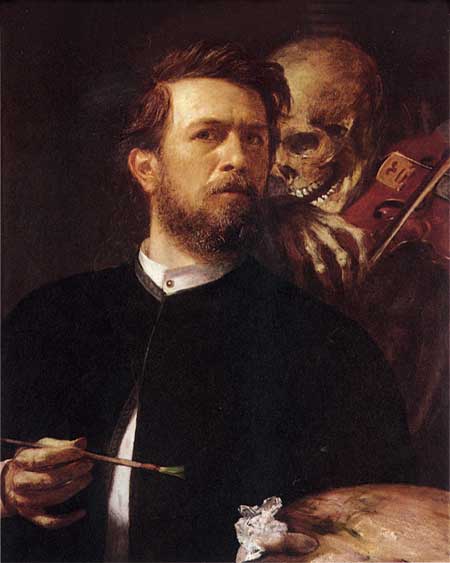
Grim Reaper Comes to Concerts

Much has been written about the declining interest in classical music, much of it for valid reasons. A number of orchestras have folded and most of the remaining ones have serious financial problems. Recitals are rare, other than those by ‘stars’ or within a university circuit. At the same time conservatories and colleges turn out ‘professionals’, musicians with a degree, in increasing numbers. Odds of these young adults finding the kind of employment they want are less every year. Even for someone who has been employed for years, changing jobs in the same field is nearly impossible, unless they have inside connections. Most are forced to turn to teaching, whether they have a talent for it or not, and this in turn will contribute to creating even more unemployable musicians.

Of course classical music isn’t dead and will not die. What we have is a gross imbalance of supply and demand. Orchestras have had to increase salaries for their musicians and in turn have added more concerts over more weeks to earn an income from ticket sales. To be a subscriber to a symphony orchestra season is a major undertaking and involvement these days. I certainly would see no reason to pay a lot of money to go hear a year’s worth of often mediocre performances of works I don’t even like. The few times when something would awaken my curiosity I would buy an individual ticket. A small recital series with five or six concerts by good instrumentalists and a modest number of chamber orchestra performances might be more tempting and feel like less of a waste of my time and money.

Soloists and conductors are earning astronomical amounts for the work they do, not to mention the heads of orchestra administrations. The increased workload means that musicians no longer find pleasure in their work and they are bitter that a star soloist earns as much or more in one gig than they do in a year. The book ‘Mozart in the Jungle’ is worth reading for the last ten pages alone, as Ms. Tindall analyzes today’s classical music realities very well.

Of course there are numerous people who don’t see the situation in such grim light and even claim that music has never been as successful and popular as now. Just recently Allan Kozinn wrote a long article in the New York Times titled ‘Check the Numbers: Rumors of Classical Music’s Demise Are Dead Wrong.’ He brings out some important points and facts. Interestingly, the article has a picture of the audience listening to the Houston Symphony earlier in the year. The same reviewer wrote at the time: “It was a risky venture: Carnegie, which has a hefty orchestral series, wasn't sponsoring this concert, meaning that the orchestra had to rent the hall and find an audience. Some of its public came with it from Houston, but even so, empty seats were in good supply.”

Another article appeared a few days later: Daniel J. Wakin wrote an interesting piece titled ‘MUSIC; Fancy Hall 4 Vry Lo Rnt’ in which readers are made aware of what goes into performing in Carnegie Hall. At least the Houstonians got a printed review in the NY Times and a rather nice one at that, not always the case with orchestras who decide to come and ‘conquer New York’ by renting that hall.

It will be interesting to read how the smart and insightful Greg Sandow will be responding to Kozinn’s article. Signs are he didn’t agree with it and it is easy, at least to yours truly, to understand why. Almost a decade ago, Scott Duncan (of the Orange County Register) wrote: “American orchestras in 1997 aren’t exactly a growth industry. It’s like watching the life go out of the last specimen of a nearly extinct species.”


Sunday, May 28, 2006

Remembering the Dead

Memorial Day is a good time to study how different cultures and religions relate to death and remember their deceased. Only the Buddhists and others believing in reincarnation see it as a transition, otherwise death is often thought of as a crisis, and there is a sense of finality about it. However, since the days of the Neanderthal man humans have believed in afterlife. It was customary already then to give the dead supplies for the next phase in their journey. The great cultures of ancient China and Egypt buried their rulers with everything they could possibly need, including food, weapons, servants and even spouses.

Whereas it has been important to preserve a body in many parts of the world, whether in a form of a mummy inside a pyramid or just the common embalming in today’s America, others have desired to get rid of the remains as soon as possible, usually through cremation. In times of pandemics such as the plague or even the Spanish Flu, cremation has been acceptable to people whose belief system normally doesn’t allow for it, as even the primitive man knew that it helped to prevent the spread of the disease: a decomposing body in the ground can easily contaminate the water supply. In places like Tibet and Laos, cremation has traditionally reserved for special people, such as high-ranking lamas, or in case of Laos, for a person who died of natural causes after a long prosperous and peaceful life.

The Zoroastrians, or Parsis as they are called in India, came up with a different solution: as the dead body must not be in contact with earth, water or even fire, their deceased were placed on high towers for a sky burial, where birds of prey would soon strip off everything edible and leave nothing but bones behind. These were then thrown into a deep pit by their own ‘untouchables’, the only people allowed contact with the remains. Now comes the quiz of today: what does this all have to do with the arthritis drug Voltaren©, also known as diclofenac? During the last 10 years there has been a catastrophic 99% decrease in the number of vultures which normally do the mortician services in a Tower of Silence in Mumbai. The reason: sick cattle in India have been given this drug to help them stay in working shape. Once the animals die, the white-backed vultures dine on their carcasses as well, but cannot tolerate the drug present in the flesh and suffer fatal kidney failure. Probably many of the human bodies have high amounts of the drug as well, as we are what we eat, after all. This has become a real problem for the Parsis as now the bodies just rot. Elsewhere in the world this culture has had to come up with different solutions, such as cremating the dead in electric ovens where no actual fire is presents.

Where the Jews and Muslims want to bury their dead as soon as possible, the other extreme can be found in Indonesia on the island of Sulawesi among the Toraja people. There the time between a death and the funeral can be many years, to assure that everyone can attend and to save enough money to buy buffalo. These days the bodies are injected with formaldehyde and kept in a wooden coffin, right in the house, but in the past the body would rest in a special room on a mat; bamboo pipes under the floor would drain body fluids away.

In Greece people often bury their dead twice. Near Athens there is such shortage of land for burials that moving the remains later is almost a must to make space for others. But the people also feel that once the flesh has decayed, the bones should be placed elsewhere. We consume a lot of preservatives in our food and decomposition takes much longer these days, and supposedly it is not uncommon to have family members manually scraping remaining flesh off the bones, in preparation for the second burial.

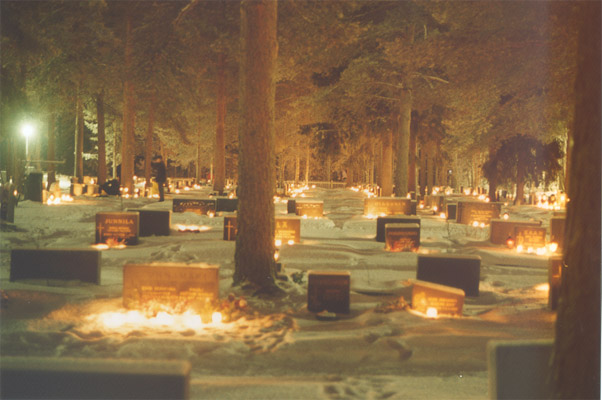
Whatever method is used for the burial, most families want some kind of gravestone or marker for the remains, unless the urn is kept at home or the ashes have been spread. This will serve as a permanent reminder of the deceased for future generations. It can be fascinating and even important to wander through cemeteries looking for the graves of ancestors, beloved ones, and friends from the past, or to just see history unfold in front of one's eyes. Although not common in my home country, I like the Eastern European tradition of showing a picture of the person. It adds a personal image to just seeing the name, and makes the memory more real. I love to visit cemeteries if they are well taken care of and park-like. Whereas an endless graveyard with just stones in New York looks depressing to say the least, the one near our house in Seattle is serene, and my wife’s mother has a perfect place there and she would be proud of the location of her final home. But nothing beats the beauty of a Finnish cemetery on Christmas Eve, when every grave has a lit candle on it, protected by glass, turning the park into a sea of glittering lights, amplified by snow.

My heart goes out to all the families of soldiers who gave their lives for freedom and in defending their country, here and wherever they are. The sad, often unspoken truth is that not all of them died for an understandable or acceptable cause, but rather because of a political mistake, such as was the case in Vietnam. Time will tell how we will view our present crisis and the many fallen ones. - My mother lost five cousins who were fighting Stalin’s Red Army. How grief-stricken that family must have been, losing every son they had. But the only daughter took over and became the farmer, continuing the parents’ work. That is Finnish sisu for you: never give up.

Thursday, May 25, 2006

Betrayal

Since a couple students rescheduled at a last minute, I took the opportunity to read Blair Tindall’s ‘Mozart in the Jungle’, which my wife had brought home from the library. The book turned out to be quite different from what I had expected, and for the most part I found it quite thought-provoking. I shall be returning to it on a later date on this blog but want to discuss one element in it now: betrayal.

In the book Ms. Tindall writes at great length about a famous accompanist, Samuel Sanders. He was in high demand and a stage partner for well-known instrumentalists, such as Itzhak Perlman. Sanders was also a very sick man who went through two heart transplants. It hurts to read that when he was in the hospital, none of his ‘friends’ bothered to check on him. No visits, not even get-well cards. It was as if everyone had decided they would no longer benefit from his services and checked him off. Mr. Sanders recovered after the first transplant, however, and all of a sudden all the ‘friends’ were back, and he went on performing with his famous partners as before. The second time around the operation was too much, and the patient soon gave up on life and left us. Even this time visitors and well-wishers were nowhere to be seen.

This is one example of betrayal. Someone is liked and befriended because there is something to gain from the relationship. Once that no longer is the case, there seems to be no reason to continue the friendship, or even pretend to care. Are we really that calculating? The unfortunate answer is yes. Nowhere is betrayal as hurtful and devastating as in family relations, marriages and similar intimate relationships. Betrayal is the cause for many marriages or similar setups breaking up, and often there is an added element of revenge attached to it. Love and hate seem to go hand in hand.

Parents can betray their children, although more often it is the other way around. A father cutting contact with his daughter after learning about her terminal cancer is an extreme case, especially when he doesn't even attend her funeral a couple months later. A grown woman refuses to have contact with her mother for a couple decades, although she lives only a few minutes’ drive from her parents. Only after their mother is hospitalized with Alzheimer’s does her daughter start visiting. At that point the parent no longer recognizes her child, but that doesn’t seem to matter. Perhaps it gives the person a false sense that she has actually taken care of her aging mother. Once the mom passes away, the daughter is very upset to find the Will in which she has been almost left out any inheritance, and spares no expense to have it nullified in court on a technicality. – Here is a another true case, about four sisters: one also decides to have nothing to do with their mother. She does, however, show up for the funeral, perhaps to make sure she is going to receive her share. As she trusts no one, there will soon be five people dividing the estate: the four daughters plus an expensive lawyer. A houseful of valuable furnishings nets the estate less than $3,000 at the end, after the middlemen involved have fattened their pocketbooks.

A revengful spouse decides to try to bring her musician-husband's career to an abrupt end by writing inflammatory letters to everyone she could think of, then destroys his entire music library, filled with everything he had studied, plus manuscripts. Forging his signature on checks arriving in the mail doesn't bother her a bit: revenge feels sweet. She also manages to permanently ‘misplace’ his old Italian violin, and makes their child in her early teens threaten to sue the dad if he doesn’t pay her mother more than the court-ordered child support. Luckily in time the relationship between the father and his children heals, although one wonders what deep-rooted issues they may carry in their hearts as a result of brainwashing at an early age. So many divorced parents are guilty of this: it causes irreparable damage and not only in the other parent, as the children always suffer the most.

What about betrayal in the workplace? How many of us have spent years, even decades, serving selflessly in a job, and then find ourselves unwanted, often also humiliated, at an age when it is almost impossible to find employment elsewhere? What makes a person betray a loyal friend and employee? I don’t have an answer to that as I could never do such a deed. Does this Western society of ours really turn many of us into cold-blooded monsters, with no conscience and no moral values? It is sad to think of ‘humanity’ as only a system where people use each other, and once that’s no longer profitable or convenient, discard friends, spouses, parents and coworkers as waste and garbage. Every religion I know of emphasizes thinking of others before ourselves, but having become slaves of greed and ‘me-first’ capitalism obviously overrides this principle.

Tuesday, May 23, 2006

Venezuelan Miracle

Our media is free - as long as it doesn't disagree with the mighty and the powerful or the super wealthy. Until recently the White House couldn't really be criticized, even though it had conducted its affairs in more secrecy than the Soviet Supreme during the Cold War. Because of this self-imposed censorship we don't hear about things that ought to involve us all, or these items get very little attention. Just a few days ago the head of Hyundai Corporation in South Korea, Chung Mong-koo, was arrested on embezzlement and corruption charges and is kept behind bars. To an average American such news is meaningless because he doesn't realize the magnitude of the case. Hyundai is one of largest auto makers in the world, soon a rival to Toyota, and arresting its top executive is like putting Bill Gates in jail and denying him bail. Time will show what will happen in this case in Seoul. The enormously large companies in South Korea are run like family enterprises, and although they are public corporations, an average shareholder has no knowledge what happens behind scenes. I wish our authorities would have the guts to investigate our corrupt business leaders and politicians in a similar manner. Color of justice should not be green.

In America money buys everything, from justice to power. Facts get twisted in the media to suit a powerful person's or group's purposes. After the mistake of invading Iraq it was hard to find any mainstream publication that was critical of it. Surely the weapons of mass destruction would turn up any day now! 9/11 was the administration's favorite term and excuse, although no connection to the terrorist strike and Iraq could ever be established. Well, things for our leaders have turned a lot more sour lately, and our president's ratings have plummeted to rock bottom, as people are finally seeing what should have been evident from the start.

Since our resources have been stretched thin, it has been impossible for our government to pay enough attention to our own hemisphere, and to our horror Latin America has made a sharp turn to the left, towards socialism. We tried to get rid of Hugo Chávez in Venezuela, helping his opponents in a coup attempt, but our success was similar to that of Bay of Pigs in Cuba over 40 years ago. Since this elected leader of his country controls gigantic oil fields, he is in a position to tell our government what he thinks of our leadership and its meddling in other countries' affairs. Our response has been to ignore Mr. Chávez, and make sure that any news coming out of Venezuela is negative. Even NPR, usually our most neutral news source, today was talking about the fact that in Caracas gasoline only costs 12 cents a gallon, and what a terrible thing it is because the gas station owners cannot earn enough, and how all this encourages more driving and pollution. Couldn't NPR just say that the Venezuelans were just mimicking the American life style, and that we are terribly jealous that they can afford to do so with such low fuel prices?

This negativity has kept some incredibly wonderful things from becoming public here, in the the field of music. I first learned from European sources about a bright, energetic star on the orchestra scene. Gustavo Dudamel had grown up in a system that provides music education to the children of slums, and now at the age of 25 has been hired to lead the Gothenburg (Göteborg) Symphony Orchestra in Sweden, the very same orchestra that put Neeme Järvi on the map. Unlike the cool and calculating Finns, the Venezuelans have hot Latin rhythm flowing in their blood and, although I haven't yet seen him conduct, I can picture how exciting this young maestro can be. All the reviews I've managed to read have spoken to this effect. His story is truly a rags-to-riches, and he must have enormous talent to have accomplished all this against seemingly impossible odds. Coming from poverty, there was nobody to buy him a career, to give a manager a large sum of money and say 'make this young man a star at any cost.' Why don't we see Mr. Dudamel here in this country regularly with every major orchestra? Is it because he is a product of a social program in a country we cannot say anything positive about? I bet orchestras here would find their halls packed to capacity, even without a big-name soloist in the program, with such flare, energy, musicality and skill on the podium. Instead, we might see an old 'fuddy-duddy' conducting, with audience members yawning, looking at their watches and wanting to hurry home, especially after the soloist has finished his or her number.

And it is not just Mr. Dudamel: Venezuela is producing an amazing number of other great musicians. With that remarkable program in place, Venezuela has become an envy to any other nation. Simon Rattle said: "This is the most important thing happening in classical music anywhere in the world". In a country where three-quarters of its 22 million inhabitants live below poverty line, hunger for classical music has created no less than 125 youth orchestras, 57 children's orchestras and 30 adult professional symphony orchestras. Sure, I'm proud of my native Finland's accomplishments, but bow humbly down in front of these amazing figures and facts.

Let us put politics aside, pay no attention to the Bush-Chávez war of words, and welcome this nation as the most inspiring example music world has to offer today. I don't usually yearn for concerts as I overdosed on them already long ago, but if have a chance to go, see and hear Mr. Dudamel or one his gifted compatriots perform, I would be happy to wait in line for hours for a ticket.

Monday, May 22, 2006

Lessons Not Learned

In the country where I grew up, Finland, people always had a special place for the little country that could, Israel. The people in both nations had suffered a lot, and having been under the whims of the Russian Czar for a hundred years, my people could well understand what the Eastern European Jews had to endure. ‘Fiddler on the Roof’ was an all-time favorite musical; I don’t think there was a theater company in Finland that didn’t come up with its own production of it, and it is still performed. Of all the countries, more young people from my homeland went to Israel to work on a kibbutz than anyplace else.

Today the Finns view Israel very differently, and for a reason. They see that country using the same tactics against its Palestinian neighbors as they themselves were subjected to. The Gaza Strip is like a gigantic Warsaw ghetto, behind a visible or invisible wall, and the more sparsely populated West Bank doesn’t fare much better. Granted, Palestinian extremists have done their best to cause havoc, and managed to derail all the plans for peace which had been on the negotiation table. But also the Israelis have their hawkish fundamentalists that don’t want give their neighbors an opportunity to live a decent and productive life, to the point that they have been willing to murder their own for-peace leaders. Even within Israel there is a great divide between different groups of Jewish citizens, depending on their origins and skin color; not to mention the Arabs who are citizens as well. The blood donated by dark-skinned Ethiopian Jews was thrown out, because in an Ashkenazi’s eyes it wasn’t ‘pure’ enough.

The icing on the cake was the recent Israeli Supreme Court’s decision not to let spouses of Israeli citizens stay and live in the country if they had been born in the West Bank. In any civilized country, the sanctity of a family comes first, as it is the very foundation and building block of any society. This ruling either tears families apart or forces them to move abroad. Not that Europeans are all known for their tolerance (just think of recent numerous racially motivated bloody attacks in St Petersburg, Russia), but tearing families apart for no real reason is hard to swallow for most people.

Especially under our present administration, Finns and other Europeans see Israel as a mouthpiece and a bullhorn for America. Since we are so far from that area geographically, taking their frustrations out on ordinary innocent Israelis seems to be the only way the Palestinians can express their rage. Answering violence with violence is a vicious circle, and hatred grows like a cancer.

There are a lot of us wanting to have a productive dialogue between the Jews and Muslims; after all the two groups are almost first cousins in origin and even faith. Islam was built on the foundation of Judaism, and the Qur’an states that the Hebrews were God’s chosen people. But war is always more popular than peace, and people don’t want to hear the voices of people like Daniel Barenboim and his Palestinian friend Edward Said, now deceased. The hope has to be in the younger generation. My daughter Anna was very proud to be organizing a Tolerance Night at her university’s Hillel, and have the leader of the college’s Muslim student organization attend. But if you a growing up in the tiny area of Israel and Palestine, chances are your mind is filled bitter hate and revenge from early on. Teachings of the Holocaust, or Sho’Ah, should have taught the Jews valuable lessons. Why are they now acting like their own oppressors once did?