One of the curses of our information age is all the unwanted email that arrives in just about everyone’s online mailbox. This time of the year seems to be especially bad: on any given day I get over 300 of these nuisance messages. I have developed a rather efficient double filtering system and hardly anything unwanted ends in my inbox. Sometimes this method can be too efficient and ‘good’ email may end up among the bad. So, I have to quickly glance through the list of senders, before deleting everything for good. Once in a while my eyes stop on something. ‘Jesus’ has remembered me with quite a few spams. I also noticed an email from toxic sounding ‘R.M. Chlorine’, a name that somehow seemed familiar. Quick glance at the sender’s ‘girliegirl.com’ domain cleared any doubts and made me quickly delete the message without opening it. ‘Are you looking your best?’ asked another message from a ‘J. Adair’ which passed through the filter because of a name in an old address book.
Sunday, December 03, 2006
Unwanted


Tuesday, November 28, 2006
Musical Evolution
Wolfgang Amadeus wasn’t particularly happy in the city, but
Giving Thanks
 As I didn’t grow up here, celebrating Thanksgiving was at first somewhat of a mystery to me. At 18 I was invited to a fellow student’s home in Los Angeles and I remember being amazed by the amount of food many of her overweight relatives were able to eat. Nobody bothered explaining the meaning of the holiday, but it obviously was a time for a family gathering and lots of food. Naturally I wanted to learn more and read the usual stuff about the first Thanksgiving with the Pilgrims and Natives. That made even less sense to me, since I was well aware of the brutal deeds done to this country’s original inhabitants by immigrants of European ancestry. Of course, in time I learned to celebrate the day. Being thankful for a good harvest obviously no longer applies to most people , but I tried to find other reasons for gratitude. Some years it has been more difficult than in others. Deaths of beloved ones have happened close to the holiday. It is also hard to be thankful for people trying to destroy one’s life and career, just to save their own neck under a threat. But my hardships have been nothing compared to those of families whose loved ones have sacrificed their lives or health in a terrible, senseless war, whether in Vietnam or in the Near East, or to those sick, homeless and living in poverty.
This year the real Thanksgiving happened a few days later than the calendar indicated. Of course we had a lovely holiday on Thursday, but then Mother Nature gave us a rare gift in the form of a real winter. The last time it has been this cold and snowy at the end of November was on our first Thanksgiving in this house 21 years ago. My late mother-in-law had come up from California and she was babysitting our three Boston terriers, while my wife and I took a long walk over the Ballard bridge and enjoyed the crunching sound the cold snow made with each step. Today became an unexpected holiday as Seattle schools were canceled, including the college down the hill from us. My daughter Anna is enjoying even more of a winter wonderland at WWU in Bellingham (see picture) where snow is more than plentiful but air is also dangerously frosty.
A real present came yesterday when my wife unexpectedly found a letter from my late mother, which she had written in early 1985. I instantly recognized her unique, strong handwriting and felt her strong presence while reading what she had to say. It made me realize that our beloved ones can still be very much part of our lives after their bodies have ceased to function. Love of my mother radiated from the two pages and I marveled her intellect and penmanship. What a far cry that powerful personality was from the later years when she fell victim to Alzheimer’s. We didn’t always agree on everything, but my mother had stronger moral principles than anyone, and she never failed to stick with what she believed was right and correct, even if it meant difficulties in her life.
My mom would share the joy my daughters continue to give me. Never pushed into anything, they have all managed to excel in their respective fields. A week ago, we got our little one’s first demo cd in our hands. Although we had secretly wished for her to concentrate on her violin, she wanted to prove to us that she is a true nightingale. I can see my mother smiling, listening to her barely 14-year-old granddaughter sing her own song like an angel, immaculately in every way. There is another blessing I would have never guessed coming my way.
Monday, November 13, 2006
Rejoice
Much has been talked and written about the downward spiraling of ‘classical’ music. While some of the alarmists have been perhaps prematurely pessimistic, there is no denying that the field is undergoing a radical change, slowly but surely, just as the Earth’s climate is warming up whether we like it or not. One reason is the lack of composers who are able to create new music which has all the needed, critical elements: memorable melodies, engaging rhythm and pleasant harmonies and sonorities. No one expects a modern piece to sound like Mozart, as we wouldn’t assume a painter produce a contemporary Rubens or Botticelli. But music has to be acceptable to our ears, not just to consist of loud meaningless sound effects. Surely, most of a concert audience likes to come and listen to old favorites, the war horses, but they don’t mean quite the same to the younger crowd. Never before has the mainstay of a concert program consisted of works created a century or two before, and the time gap is widening with every passing day.
Thursday, November 09, 2006
M.O.M.
Power corrupts. Having been in control of both branches of the Congress for over a decade, the Republican Party had it coming. More than that, the Executive branch has wielded its power for years without caring much what even its own supporters in Congress thought. I just read an intelligent review in a European newspaper according to which people will see, a generation from now, the Bush-Cheney era as the darkest period in the American democracy. The war and occupation of
Perhaps, America has some hope after all.
Thursday, November 02, 2006
Orchestras and Conductors
Although there is much more to music than symphony orchestras, their musicians and conductors, they are often the most discussed part of the classical music scene. Perhaps it is because most of the money spent on the art form goes to them, in addition to opera companies. Recently, two items in the media caught my eye. One was CNN’s series on Daniel Barenboim, the other the music director situation with the Philadelphia Orchestra.
CNN: What makes a great conductor?
Barenboim: … To be a great conductor requires a lot of knowledge of the essence of music, it requires knowledge of the phenomenology of sound, how that works. It requires the ability to make people want to play, it requires the ability to animate the orchestra, to teach, to cajole, and at the same time, to learn from what you hear from good players in the orchestra. In every orchestra there is somebody that always shows you something that you haven't quite thought of before. So it is a very complex, wonderful way of life.
CNN: Is it a position of power?
Barenboim: No, it's not. The conductor decides on the orchestra, the times, the music etc. But when the orchestra plays and it is either unwilling or unable to play like the conductor wanted, he is totally powerless. And as powerlessness often does, it makes people think they are very powerful. And that's why conductors' egos are so famous.
On press and music critics:
CNN: Do you feel misunderstood when you are described in the press?
Barenboim: When I played my first concert with an orchestra, I was eight years old in
Here are some excerpts:
So here are the lessons learned by the Philadelphia Orchestra in the wily pursuit of music directors and other acts of senseless hope:
You can't impose love on a loveless marriage.
And if your orchestra is not in perpetual music-director search mode, you're living dangerously.
It hit many musicians like the dull thud of pragmatism, this decision in January to hire Eschenbach as the orchestra's seventh music director, starting in September 2003. At a meeting announcing the decision, players responded with silence. No applause, no excited stamping of feet. Silence. And then the resentment poured forth.
One musician used the word "underwhelmed." Another said he felt "betrayed."...
What a way to usher in new musical leadership.
Waiting for chemistry could take years, but the orchestra really has no choice if it remains committed to the idea of musical quality as the criterion. No one can afford another arranged marriage. Too much is at stake, and some critics believe that the orchestra is already injured.
Music-making is not accounting or hospital administration. Its success depends entirely on love - even if it is love by way of fear and respect, as it was with Sawallisch. Chemistry counts. The notes on the page are only the beginning. Meaningful interpretation develops somewhere in the air between the podium and the orchestra risers.
At the end Peter Dobrin names twenty conductors worth consideration in his opinion. As so often, it is more interesting to discover who is absent from the list, not who made it. Surely the orchestra will find a capable director, or perhaps they will end up with a different solution by having multiple conductors in charge. At least they are looking.
Wednesday, October 18, 2006
Reading is Believing?
 Americans are usually very proud of their freedom of speech and press, and tout it as an exemplary way of life to other nations, especially those in which democracy doesn’t exist or is limited and perhaps corrupt. Generally we think of this freedom in the form of a writer being able to tell the truth, which would be the ideal. And one is also free to express his or her views, but in that case great care should be taken that something isn’t presented as a fact if it is just an opinion.
Nothing unfortunately prevents a crooked or biased journalist or reporter presenting fiction or lies as truth. If given a choice, people usually choose an interpretation of news that pleases them the most, or whets their appetite for scandal and sensation. During the first years of the war in Iraq many Americans turned to Fox News because it painted a rosy picture of the U.S. and the coalition forces’ success. The network presented the war in a more victorious way than CNN, for example. It was as if questioning the reasons for the occupation, or mentioning the casualties, was unpatriotic, and something we didn’t want to hear and read about. Of course, today people no longer blindly believe all the fairy tales coming out of the White House press room. Assassinating Saddam’s sons and capturing the former Iraqi leader himself was supposed to bring hostilities to a quick end. As this didn’t happen, we found a reason: Al-Qaida was sending foreign terrorists to Iraqi soil and all the mayhem was their doing. Not to worry: we had a handle on the situation and in no time the country’s own police force was going to take over and bring peace to the people (and cheap oil to us). While some of this was true (there have been a number of foreign militants in Iraq who have entered the country to drive the infidels and occupiers out), our leaders flatly denied that at the root of the chaos was sectarian violence, hatred between different Muslim groups. The press secretary and Mr. Rumsfeld have been quick to dismiss any talk about civil war, something that seems quite obvious today to most people aware of the situation, including our own military leaders in Iraq.
Recently the Lancet, a very respected medical journal, published its detailed study on the amount of casualties in Iraq. It came up with a number of completely different magnitude than we had seen before, with probably over 600,000 Iraqi victims. Statistical error margin puts the figure at 200,000 at the low end and close to a million at the maximum. Our government and Neo-Conservatives were immediately ridiculing the study, without even bothering to examine the methods used to come up with the staggering number of dead. For many people, hearing the President say that the Lancet article ‘was not true’ was enough, although how would he himself know. Obviously there is more than a little bit of truth behind the journal’s conclusions. A few decades from now, or possibly even before, the United States may no longer be the world’s leading superpower and then it will be feasible to picture us being accused of war crimes. Of course this country will protect its former leaders and other people suspected of guilt, but it would only isolate us further from the rest of the global community. We have always insisted that it was a ‘must’ to drop nuclear bombs on Hiroshima and Nagasaki, causing hundreds of thousands civilian deaths. Since we won, we could never be condemned for this atrocity in an international court. But what if Germany had been successful with its own atom program and dropped a bomb on Britain, another one on the Soviet Union, possibly forcing them to negotiate a quick peace agreement? Would today’s history books claim that Hitler, Himmler, Göring and others were great war heroes? Would the Allies have been punished for bombing German cities with cluster bombs? History is always written from the perspective of the winner, at least for many decades to come.
Compared to years ago, today’s people are far more skeptical about what they read in newspapers and magazines, or what they hear on radio and television. Yes, they have become more suspicious but perhaps not enough. We all know how masses can be manipulated by propaganda, and a journalist or a reporter with an agenda can plant seeds of his own bias in the minds of ordinary readers or listeners. Too many of us think that if it was in the paper, it must be true. John Mark Karr was declared guilty by the media of the little Ramsey girl’s murder, although there was no solid evidence. Of course now we all know he is but a fruitcake, who on ‘Larry King Live’ promised to write a book and do other things to benefit from his undeserved fame and short time in our media’s spotlight.
Recently, colleagues of mine have been accused of terrorism in the workplace, according to local papers. I haven’t read the stories, but have been told about them by many of these people. They claim the accusations are false, and were purposely planted in the media with the help of reporters, who either wanted to stir trouble, help their friends or had other motivations. To an outside observer, the ‘facts’ as they supposedly have been reported, sound rather retarded and created by someone with an elementary or middle school mentality. The accused have been very upset, and I can understand how they feel, having been targeted enough times by slanted journalism. It is sad if a respected paper tolerates lies that suit a seriously flawed writer’s agenda, and agrees to publish them without verifying facts or hearing from all sides. Such a reporter should be dismissed immediately and never allowed to publish again. A serious newspaper is not afraid to act in this manner. We have witnessed, in recent years, prominent journalists getting fired from their high profile jobs, for falsifying facts. Freedom of press and expression carry a responsibility with it, to be unbiased and fair in reporting, or if that is not possible, clearly make sure the reader knows this is only the opinion of an individual.
Iran and North Korea have their papers and other news media, too. We don’t rush to accept their articles at face value, but rather ridicule their point of view. However, to the people in those countries who read and hear them, they represent the only truth they are exposed to, and America’s opinions are mere propaganda in their eyes. To a person in a neutral country, both views are probably equally biased and faulty. There are plenty of affluent and well-educated people in Western societies who understand the desperation and frustration that many of this county’s ‘enemies’ experience, although they probably will not agree with it. But neither do they see American values as something worth bragging about. If you threatened to take health insurance, unemployment benefits or free college education away from EU citizens, they would create civil disobedience of a magnitude never witnessed here. Freedom comes in many forms: you could also say that we don’t have to work, go to college or carry health insurance. We are also free to accept lies.
picture: fodey.com
Wednesday, October 11, 2006
Do-Not-Ations and Con-Tributions
Great tragedies, either global or national, usually create an immediate response from caring people who want to help. Interestingly, events such as 9/11 or Hurricane Katrina, gave birth to a large number of new non-profits. In most cases the reason behind creating such organizations is hardly humanitarian, but an opportunity for shrewd people to make a big bundle of money for themselves. It is well known how even the help from the government and big national institutions has had trouble reaching the truly needy and suffering victims. People have lied about having had a relative or significant other perish in the World Trade Center, in order to collect money. After Katrina, once it got its help program started after an amazingly long wait, the government was handing out $2,000 debit cards to both the needy and those who used the cards to gamble, buy luxury items or take vacations. There was hardly any accountability. Nobody has really researched thoroughly, to my knowledge, how much of the privately collected money was distributed to the families of 9/11 victims. Of course, the more time it has taken to locate such people in need, the more the people running such a fund have had an excuse to collect salaries and other administrative fees. These can amount to a lot: although not through donations but mandatory taxes, car owners here in Seattle have paid many years for a Monorail that doesn't exist and probably never will. Yet all the money is gone and many have obviously benefited financially from the huge amount of money collected. And what about the cost of planning the new Ground Zero monument in New York? Contests were held, winners declared, yet plans were thrown out and the circus began again. It would be interesting to have a study that showed how much certain individuals have earned from that mess.
Back to charitable contributions: hardly a day goes by when the phone doesn't ring off the hook from calls for donations. By now, we no longer pick up calls from any toll-free numbers, or those from solicitors whose names we recognize. These days callers have become smarter and block their identities. If I pick up and it turns out to be a request for money, I usually ask why the caller is doing so anonymously. Often they just hang up then, rather than come up with a made-up excuse. At other times I have asked how much overhead expenses there are, in other words how much of the money actually reaches the target. Most of these telemarketers don't have a clue or are unwilling to give out such information. Then there are all the War Veteran organizations. As I know how miserably this country (the U.S. is hardly alone, though) has taken care of those who have served and come home wounded or an emotional mess, incapable of leading a normal life, I would like to help. Soon I came to realize how many groups there are with almost identical names, all claiming to represent the same people. I have checked the background of many such groups and been astonished at the high overhead percentage. Also, there are a number of groups that according to their name are linked to law enforcement or police when in fact they have nothing to do with it. Certainly I would like to keep kids out of trouble, but not fatten the pocketbook of someone who is running the scheme. Often solicitation requests come from national professional fund raising companies who siphon off easily a third of the money. They will never tell you their true identities unless you ask, or check the phone number on your Caller ID, and decipher the name with the help of Google.
Certainly there are worthwhile organizations doing important work. The Red Cross rushes to help victims of disasters and wars globally (although they weren't allowed to go into New Orleans when the need was its greatest, if I remember correctly). Doctors Without Borders is an incredible group and there are many others. We have supported an orphan in Rwanda, and give money to UNICEF monthly. Here in Seattle we have a wonderful library system which however is short on money, thanks to the increasingly tight budget of the city. I don't think contributions to the Seattle Public Library Foundation go to waste and since this family uses the system's resources practically every day, we feel more than happy to be of help. It is hard to picture the head librarian of the system driving a luxury import, although I could be mistaken, of course.
A good indication of a non-profit's moral health is the salary and lifestyle of its executives. Such an organization, by its very nature, should not be compared to the private sector, yet many executive directors and other figureheads seem to expect similar pay packages and perks. Big local arts organizations, such as opera companies and symphony orchestras, often have people on their payroll that earn salaries that we associate with professional athletes or successful movie and television stars. If an orchestra has 10,000 subscribers (a dream for most) and every one of them would donate a hundred dollars in addition to their expensive season tickets, that extra money wouldn't, in many cases, even pay for the Music or Executive Director's salary. Of course, a number of well-to-do donors give much more, but to some less affluent such an extra contribution is possible only after serious consideration. They must believe that this gift is really needed and will make a difference. How would they feel if they were told that this money would barely pay for a free meal or two for 'more important' donors at the director's house where such entertainment is frequent, often many times a week? Or that the sum would cover 0.02% or less of an overpaid soloist's fee for the week, or sometimes just one night? There are needs and then there are needs. If an arts organization, and for that matter a private company, is having a hard time making ends meet, wouldn't it make sense that those who earn the highest salaries would be the ones having to make the greatest financial sacrifices? But as we know, the opposite is more the norm than the exception.
The Bill and Melinda Gates Foundation has been often criticized for not distributing its wealth to the arts community, as with such enormous capital it could keep a large number of organizations 'healthy' and their executives well fed. However, they seem to have a different focus, something I wholeheartedly agree with: improving health of the needy worldwide through research and direct funding, paying for schools (which even in our rich country have been neglected), and having an interest in libraries which are a key to education and a treasure chest for the average world citizen. Granted, we all have paid dearly for our Microsoft products, but it is good to know that at least some of the money is being used in a truly meaningful and humanitarian way.
Next time you are about to say 'yes' to a pledge drive or donation request, think about it for a while. By agreeing to pay for something without caring where the money ends up is foolish and wrong. Demanding to know details is not only your right but also a moral responsibility: accountability is something sorely lacking in our society (think Enron or Halliburton), and by firmly asking for facts these organizations will actually be forced to become fiscally more responsible. Sharing is important and makes one rightfully feel good, but remember that there are a great number of crooks out there trying to con us and in essence wanting to sell us snake oil. That hundred dollars could save many children's lives in Africa, or provide help to a small local arts group. It could also pay for someone else's Filet Mignon and two glasses of fancy wine.
Monday, October 09, 2006
WMD Again, This Time For Real
 Our intelligence agencies must really be red-faced now that even the most die-hard hawk has had to come to terms with the fact there were no WMDs to be found in
  Some world leaders may breathe easier, strangely enough, as this news has replaced a lot of embarrassing items on the front page. Vladimir Putin might be one of them, after the assassination of “
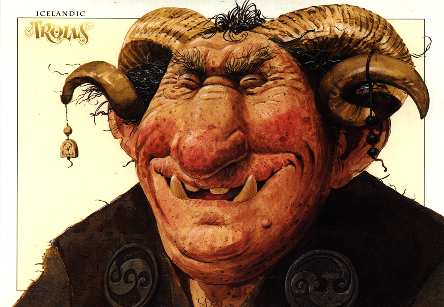 whether I need to start wearing body armor, just to be safe. A few nights ago I saw the Devil in a dream, for the first time that I can recall. He had some familiar facial features, but otherwise looked like a troll. It was a powerful dream in which evil was everywhere to start with, but little by little goodness prevailed. The Devil ended up being powerless in front of me and I ordered him to fix the house’s toilets. I’m still trying to fully understand what the symbolism was, the incarnation of evil being reduced to a plumber. There was a time in my life when a ‘Kakkenputz’, a poop cleaner, was hired by an organization to take care of its unpleasant business, so this could have been behind the dream. Had I been a prophet, I could have written another Apocalypse for a religious book based on this ‘vision’, although it would have been more optimistic than the one we now read, and “666” could have become “285” or something of the sort.
Tuesday, October 03, 2006
Is The Earth Flat, Too?

So, what's next? Could we replace the President and other public servants with life-size cut-outs and have others make the decisions, faceless behind the flat pictures? The entire congress could look all smiles, and be present 100% of the time. The actual voting could happen via the internet; trained actors could deliver 'speeches' on C-SPAN. What about doing this in something like the arts? Concerts and opera productions could use music from the best recordings available via a sound system. Pictures of singers could be moved with strings: Pavarotti could be in every production, from the Met to Des Moines. Imagine an orchestra where every musician would look happy, young and skinny, and Toscanini and Bernstein could be awakened from the dead easily. A couple of strings attached (no pun intended) would make the conductor move about in tempo, and to an audience's delight he could also now be facing the audience: no more staring at the backside of a local maestro. Every performance would be perfection, a music lover's dream. Like the soldier's child, listeners, too, would be pleased with the visual image. Like the Flat Daddy who doesn't suffer from nightmares and want to take his frustrations out on his family, the musicians would be the perfect orchestra, and a cost effective one, too.
It took a long time for the world to accept the fact that our Earth was round. The church and most sovereigns were opposed to the idea and people didn't know better. Our society is kind of going back towards those times. Evolution is no longer accepted by a majority of Americans. We want to believe in a divine design in which we were created after G-d's image. Never mind that our gene pool is almost identical to that of the great apes; what do scientists know after all.
If we had only one eye, we wouldn't percieve anything as three-dimentional, and couldn't really tell the difference between a flat image and the one in 3-D. A blind earthworm can only go forwards or backwards. It is happy in this one-dimensional world which is all it knows. Perhaps one of the true fundamentalists could tell us if our Creator is also a 'Flat Daddy', although an almighty one?
Photo: Katie Zezima, NY Times
Tuesday, September 26, 2006
Honor and Responsibility
It never stops amazing me how this country regards honor and honesty. What a stark contrast our system is to the Far East. When a company here is heading for bankruptcy the CEO and chief executives quickly cash in, give themselves huge bonuses and then let ordinary investors and the company’s workers suffer. Only occasionally are they made responsible when the fraud is too obvious and would backfire politically, such as in the case of Enron. Even in that sad saga there was a movement to protect Kenneth Lay’s criminally amassed fortune after his death, so that his heirs wouldn’t suffer. The Bible talks about people being punished to the third and fourth generation for someone’s grave sins, but our fundamentalists seem to have forgotten that part, although in other issues they seem to take the book at face value.
Japan presents a completely opposite philosophy and way of life. Honor is to be preserved at any cost, even if it means committing a hara-kiri (seppuku), a ritual painful suicide by disembowelment. When Japan’s real estate values collapsed in the 1990s, together with the stock market, many people no longer could afford the high mortgages they had taken during what seemed like an unstoppable economic rise. Rather than following what our country would have done in that situation, Japanese banks realized that foreclosures would have meant shame and loss of face to the borrower and decided, at least in many cases, to absorb the loss.
Here it is customary never to take blame for failure. Whether a company, an arts organization or just an individual, we seem to have a need for finger pointing and finding a scapegoat. Just think of the disastrous handling of hurricane Katrina’s aftermath: nobody admitted to be at fault and the head of FEMA, who was forced to resign following a public outcry, was soon given another important position. In China where toxic chemical, benzene, accidentally was spilled into a river near Harbin and millions of people went without water for many days, the official whose responsibility was to oversee environmental issues ended up taking his own life, in spite of the government wanting to blame the country’s biggest oil company for the accident. Honor is highly respected in that country, too, in spite of the communist system which usually breeds corruption, and one of the most severe punishments, short of a long prison sentence or death penalty, is a public admission of wrongdoing and thus casting shame on the individual.
Wouldn’t it be great if the president took the responsibility of all the mayhem following the invasion of Iraq, even though it is obvious the plans were concocted by others in his administration? We rightfully accuse Hitler of WWII and the Holocaust, and yet his role was probably to be a figurehead and get people into a frenzy with his oratory skills. He wouldn’t have been intelligent enough to have developed a detailed plan to systematically murder millions of Jews and other unwanted in the Third Reich’s concentration camps. Stalin, on the other hand, distrusted even his closest people, and the mass murders in the Soviet Union were his planning, although with the help of other shameless madmen. Same is probably true with Mao in China, who of all the dictators had the most countrymen killed. How would we view Hitler today if England and the Soviet Union had to surrender and Nazi Germany would have emerged victorious? After all, our country had a strange love affair with him; a lot of people admired him as modern day Ceasar, as evident on the New York Times’ coverage of the opening of the Berlin Olympics. A wave of anti-Semitism had spread over the U.S. and very few would have had the courage to have brought up the fate of Europe’s Jews. We only joined the war after the Japanese bombed our naval base in Pearl Harbor, and Germany declared war against us four days later. In France, which was divided into the Occupied Territory and Vichy France, we had rushed to send an ambassador to the latter, thus seemingly giving our blessing to Germany’s actions.
Closer to home, many arts organizations here are presently fighting for their lives, with increased expenses and decreased audiences. Multi-million dollar deficits are more the norm than an exception. Of course, the people in charge have to take responsibility, which most do honorably, resigning and giving others a chance to improve matters. However, there are cases where a person holds on, in spite of pleas and clear handwriting on the wall. These are the art world’s 'little hitlers' who insist on staying in power even when their world is collapsing. After all, Berlin was but a pile of rubble before the Führer and his mistress ended their lives in a bunker.
Sunday, September 17, 2006
In A Heartbeat

Sensing rhythm and counting properly are one of the cornerstones of music. Like intonation, it comes naturally to some but takes a lot of training for others. Luckily for want-to-be-musicians it can be learned, often with less effort than other areas of basic musicianship, and later, artistry.
One’s cultural background, and sometimes genetic, plays a role. In my view, the people with the best sense of rhythm in their blood are of African origin or descent. Complicated drumming patterns have been the most important way of communicating beyond language barriers (tribes living in close proximity may often speak in an unrelated tongue) and to share joys of life with dance. A close second are Latin Americans with their incredibly seductive rhythm-based music. Often here the roots may point to
More on different areas of the complex art form of performing music will follow here on a later date.
Tuesday, September 05, 2006
End-of-Summer Reading
This is a good time of the year to do some reading before the season starts in full swing with school and other activities. Yesterday morning I was up early and picked up a book called ‘The Death of Common Sense’, by Philip Howard, and finished it while waiting for the family to wake up. Subtitled ‘How Law is Suffocating
By accident, while searching on the web, I came across an excellent article on trauma in the
Finally I’d like to recommend a thought provoking article published In These Times and written by my own daughter Silja Talvi, ‘Narcissists “R” Us?’. Partially a book review of Christopher Lasch’s “Culture of Narcissism: American Life in an Age of Diminishing Expectations” but with plenty of personal research and content, the article brings to mind many self-important people whom one can picture looking in the mirror the first thing in the morning and saying “God is great, but so am I”. Out of curiosity I checked on publicity of several arts organizations and discovered a few mug shots of conductors representing an orchestra, but of no directors of an opera or a dance company, unless they are performers themselves. Perhaps a truly charismatic conductor can attract an audience with his photo (Michael Tilson-Thomas in San Francisco comes to mind), but orchestras often play better for visiting maestros, and after all it is the players who produce all the music, not the man with the baton. Opera companies like to show scenes from a production, as do ballet groups, or perhaps they display photos of their star soloists. We would feel it was absurd if a baseball or football team would feature its coach as the main attraction, as important a function as he serves. Surely there are narcissists leading those organizations, too, but enough common sense is alive in this case to keep them in the background where they belong.
Friday, September 01, 2006
Price of Friendship
Friendships come in many forms. Some people are proud of their large collection of friends, most of whom fall in the category of acquaintances, at least in my view. Some others have only a few people they'd call friends, but they tend to be lifelong and close ones. People in today's 'me-first' society tend to be rather selfish and choose to be friends with someone only if there is something to gain from the relationship. Most of us would rather talk than listen and observing 'friends' interact one often notices a lot of monologues, politely done in a sequence, but little else. I complain or brag first, then it is your turn. When something happens in life where the other person could use a real friend, it is all too easy to disappear and remove this individual from the list as he/she has outlived his/her usefulness and might become a burden or a liability instead. People going through a divorce or a major illness soon find out that most of their supposedly best pals are nowhere to be seen. A head of a non-profit organization might invite potential wealthy, usually elderly, people into their homes and lives, making these folks feel like like they are special. Of course, it is easy to fall into this trap, but this form of friendship comes with a steep price tag as hefty sums of money in the form of donations are expected in return. Perhaps the 'victims' realize they are being used but usually denial steps in and the cruel truth remains hidden.
Talking about buying friendships, there was an excellent Op-Ed in yesterday's New York Times, titled "The High Price of Friendship". Although the facts told in it are nothing new, it is a good refresher course about this country's 'coalition friends' and the enormous amounts of money we pay countries so that they'd officially be 'on our side' and send often minuscule number of soldiers to Iraq or Afghanistan. Little Estonia and Albania receive millions for their participation and have become our trusted friends and allies, even though the public opinion, in at least Estonia, is not as pro-invasion as we'd like to pretend. The article is worth reading; its questioning of the wisdom of paying for a coalition of friends that are there for the money alone. It is sad if America can only find sympathy and understanding by buying it, and a sign of what the rest of the world thinks of our values. Clearly the fact that a year after Katrina people's lives and the city of New Orleans itself are still in shambles is hard to understand. How can a country that can't take care of its own back yard tout itself as a model for other nations? Last week the Christian Science Monitor published an article, "Numbers show a second-rate US" , in which statistics from a Washington think tank, the Economic Policy Institute, show that the United States is near or at the bottom of industrialized countries in poverty, both among adults and children. My native Finland, on the contrary, has the lowest percentage of people living below poverty level, of any country. Perhaps that explains why it is difficult for me to appreciate the value system here. While freedom of speech is wonderful (unless someone influential doesn't like what you have to say and sends the police to your house), one should also have the freedom of education and guaranteed health care. And why is it that the country that parades itself as an example of freedom has locked up more people in prison than any other place, except for North Korea and perhaps China? We are also evidently very pro-life, yet we put to death more people than countries that are really low on our list of human rights.
Back to friendships: although many dear people to me have passed away, I still have others who have remained close since my childhood and youth. There is very little they can benefit from our relationship, other than knowledge that after all this time it feels good to care and love. They certainly wouldn't act like a longtime 'friend' of my wife's who accidentally bumped into her in a record store, turned white as a sheet and ran out like a dog with its tail between the legs, without uttering a word. There are people, and then there are people. One of my favorite shows, 'Curb Your Enthusiasm', has an episode where Larry David finally agrees to donate his kidney to Richard Lewis. The recipient is so grateful to his friend that he offers to do or give anything in return. Larry sees a golf club, a putter he likes, and asks to borrow it. Of course the friendship doesn't stretch that far and Richard refuses the request. In the show the once doomed friend feels great after his transplant and goes vacationing with pretty girls; the donor in turn gets very sick, dies but is returned back to the living. The series is outrageous but portrays people with their usually shallow relationships and chit-chat talk more truthfully than any other show, to the point that it is often painful to watch. If you haven't seen it, rent a season's worth or catch it on HBO: chances are you'll become a fan. Warning: it doesn't have a laugh track, so one needs to decide what is funny and what isn't.
Tuesday, August 22, 2006
End of Summer
This time of year has a sad element to it as a number of students are leaving, having graduated from high school and going to college in other parts of the country, or having finished college here, getting married and starting their own independent lives. This past week I had to say farewell to two wonderful young human beings. One surprised me by having beautifully memorized the Bach Chaconne for her final lesson, another one by playing the Conus violin concerto like the best of them. Although both easily could have pursued a life in music, only one decided to do so. I am reluctant to encourage anyone to go into this field in these uncertain times; yet for some music is a burning desire and they really have no other choice at this young age of hopes and dreams. This young woman in question will do fine in New York: never have I seen someone her age make so much progress in a year's time. Often a student and a teacher don't make a good match and she was stuck in that situation. In her case I was able to free her from whatever was holding her back, and was delighted to watch her blossom into a young mature artist. The previously insecure and hesitant sound has developed into a magnificient and brilliant one, and her technical potential will have no limits. I am so happy to have been able to be a catalyst in her life to help her through this metamorphosis. The other young lady has been no less of a source of joy. I know that she got a lot from me musically and she'll always play well. In turn I learned a lot from her. A true scholar, she will have a bright future ahead, no matter what she'll decide to do after her years at Rice. I hope that both of them will stay in touch for years to come. Former students are often unpredictable in that respect. Some disappear completely, others become like adopted children and make the teacher part of their families and lives for decades.
I will also greatly miss my students who graduated from the university down the hill from us. They will start their own professional lives and if they will stay in the area as it seems, we will be bumping into each other without a doubt. Since I never was able to keep the lessons as short as mandated, we also had managed to do enough talking about life and its issues to get to know each other as fellow humans. This is what I find most rewarding about teaching; learning happens in both directions. Young adults may not have the life experience of an older person, but neither are they burdened by the unpleasant realities of later life, with its backstabbings, deceit and such. It is too bad that we have to go through such negative experiences at all. If the human race only weren't so imperfect, selfish and looking for one's own benefit at any cost, life would be nice indeed. Unfortunately, in this society of ours, niceness, kindness, honesty and good will are all considered to be signs of weakness. How many acquaintances and colleagues we all know who would do just about anything to advance their own careers and other seemingly important goals. Success comes at a price, at the expense of humanity.